podsumowanie KPBN 2025-10
Autor foto: Fundacja im. Kazimierza Pułaskiego
Summary of the National Security Industry Club’s Activities in 2025
Published: December 18, 2025

podsumowanie KPBN 2025-10
Autor foto: Fundacja im. Kazimierza Pułaskiego
Summary of the National Security Industry Club’s Activities in 2025
Opublikowano: December 18, 2025
In 2025, the National Security Industry Club (KPBN), operating as part of the Kazimierz Pułaski Foundation, continued its mission to integrate the industrial sector with public institutions in the field of national security. By organizing a series of meetings and debates, the KPBN focused on key challenges and opportunities for the Polish defense industry and security sector.
Meeting on the Polish space sector
On January 28, 2025, a meeting dedicated to the development of the Polish space sector was held at the Law Office of Wardyński & Partners. The event was attended by representatives of institutions such as the Polish Space Agency and the Space Research Center of the Polish Academy of Sciences, as well as companies from the space industry, including Creotech, Exatel, and Thorium Space Technologies. Discussions focused on regulatory barriers, the need for investment support, and the importance of space technologies for national security. Representatives from Accenture discussed some of the findings from a report on the impact of space technologies on business development.
A meeting on the financing of the defense innovation ecosystem by venture capital funds
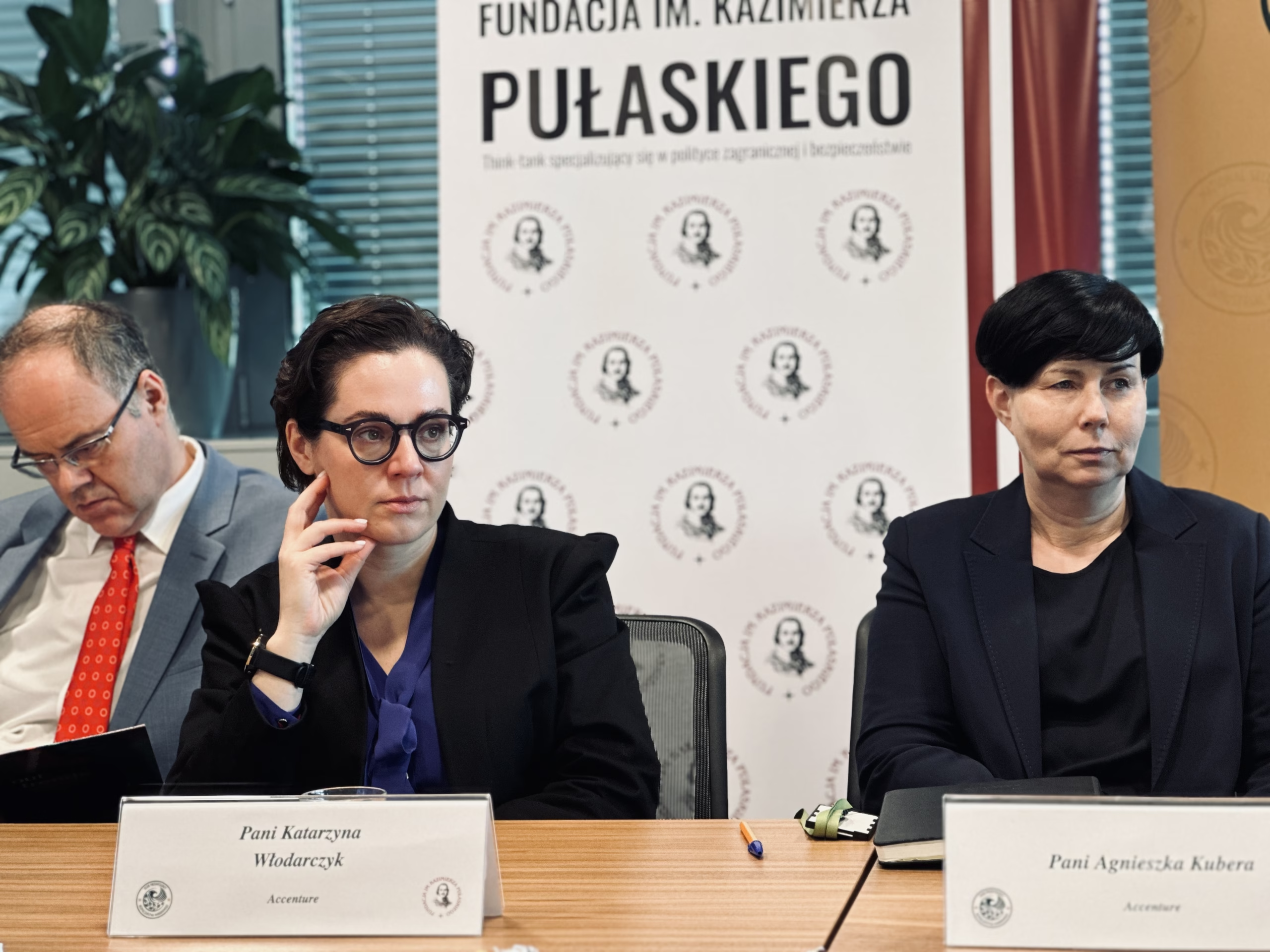
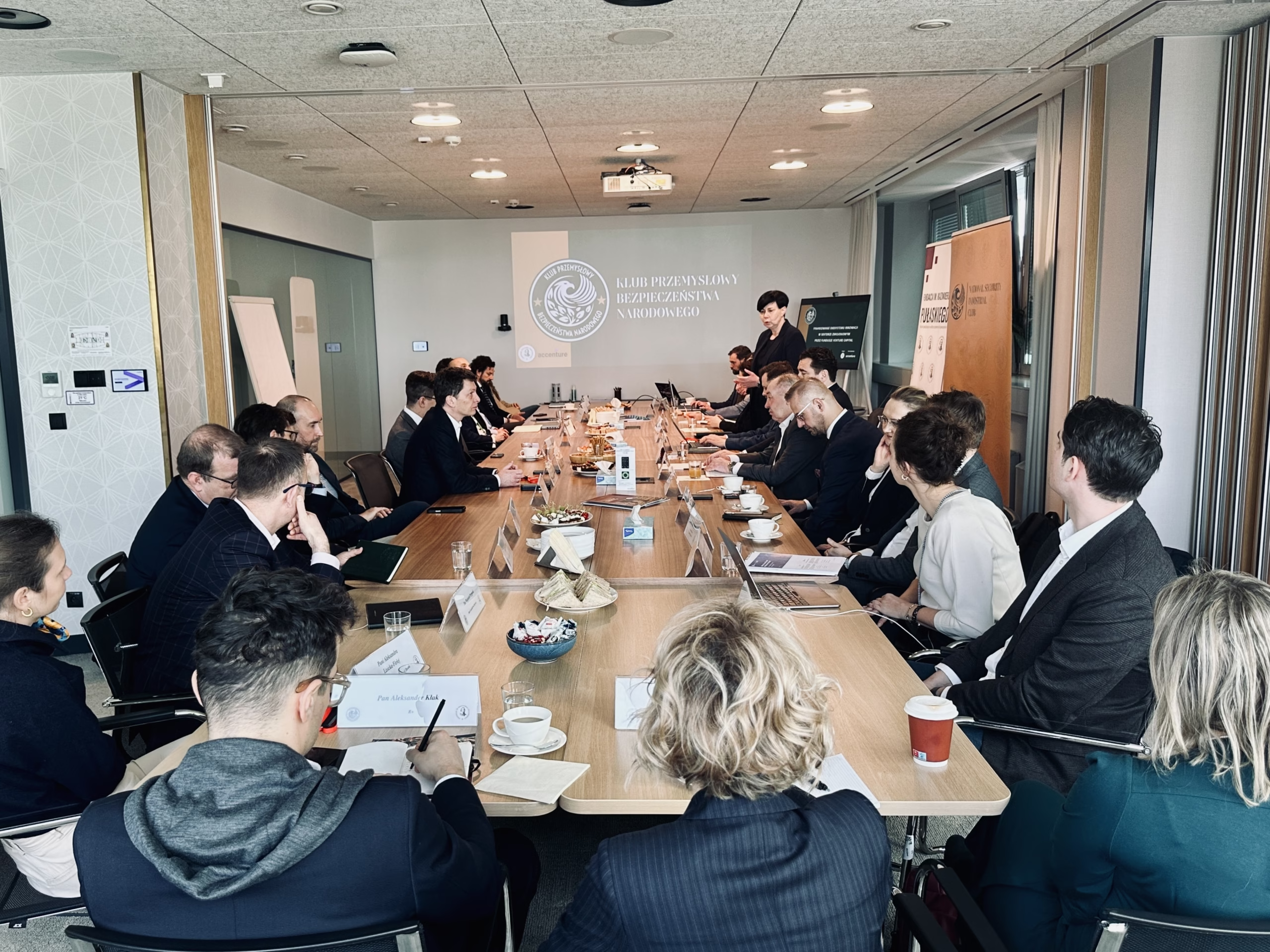
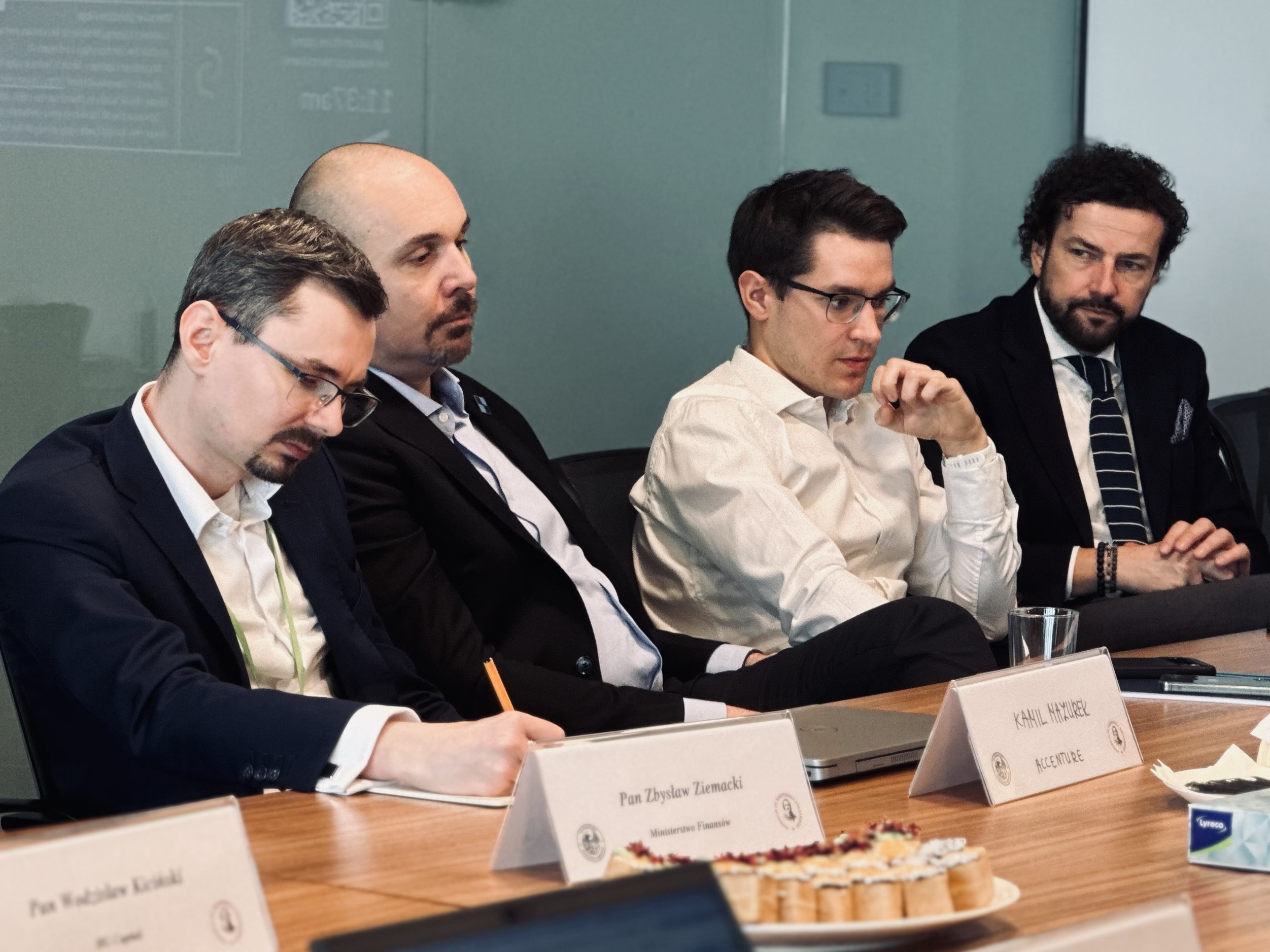
On March 5, 2025, a meeting was held at Accenture’s headquarters focusing on the financing of defense innovations by venture capital funds. Participants included representatives from the Ministry of Finance, the Polish Development Fund, Bank Gospodarstwa Krajowego, and investment funds such as MS TFI, Expeditions Fund, R+Global Opportunities, Balnord, OTB Ventures, and Sunfish Investments. The meeting discussed the Polish Defence Fund program and the differences in how the public and private sectors finance innovation.
A meeting titled “The White Paper on European Defense and the ReArm Europe/Readiness 2030 Plan – Implications for the Polish Defense Industry”
On April 16, 2025, a meeting was held regarding the White Paper on European Defense and the ReArm Europe/Readiness 2030 plan. Participants in the debate included representatives from the Ministry of National Defense, the Polish Armaments Group, WB Group, and the Niewiadów Group. The discussion focused on the potential benefits for the domestic defense industry resulting from European investments.
Polish-Norwegian Defense Industry Seminar
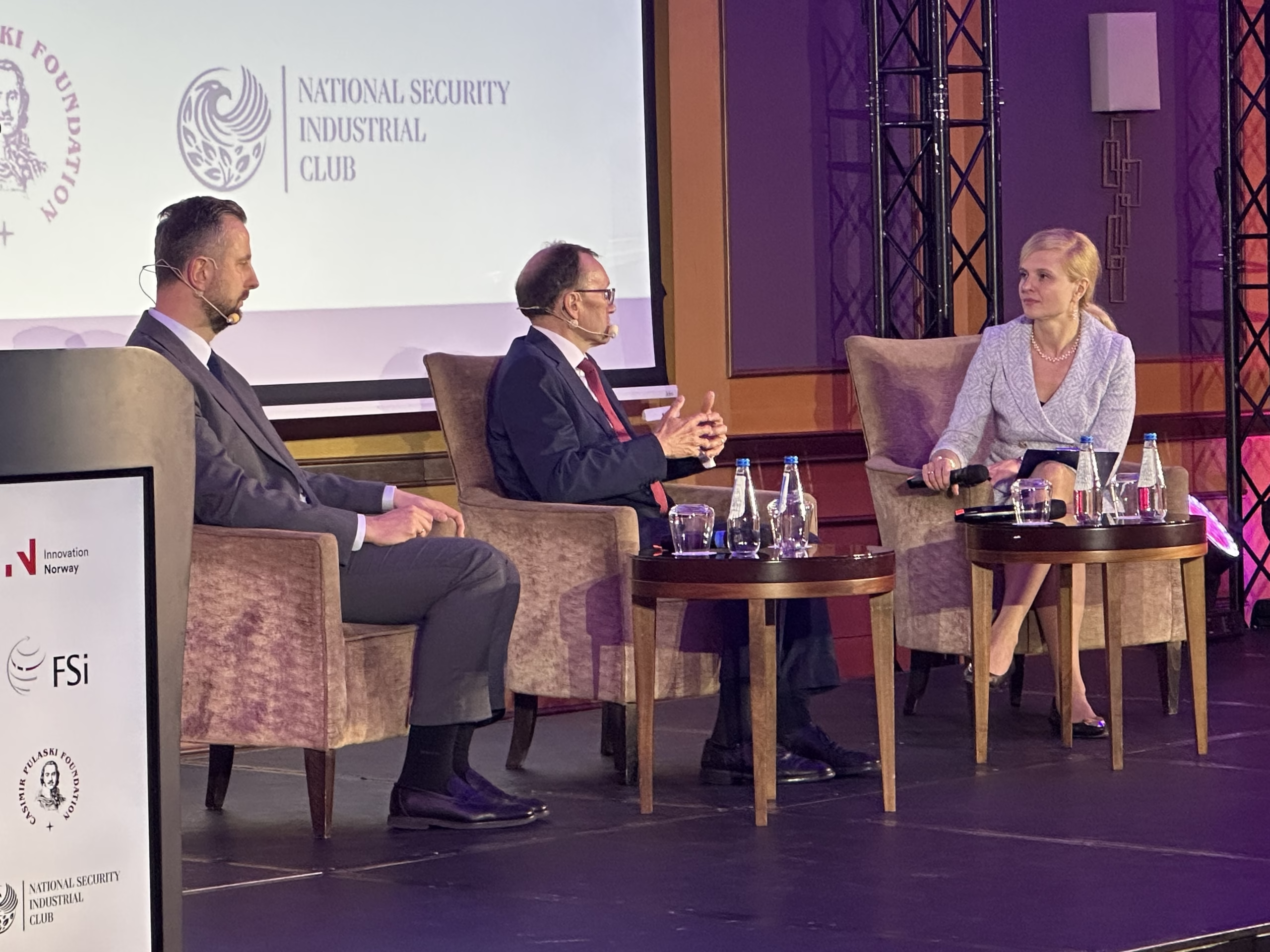
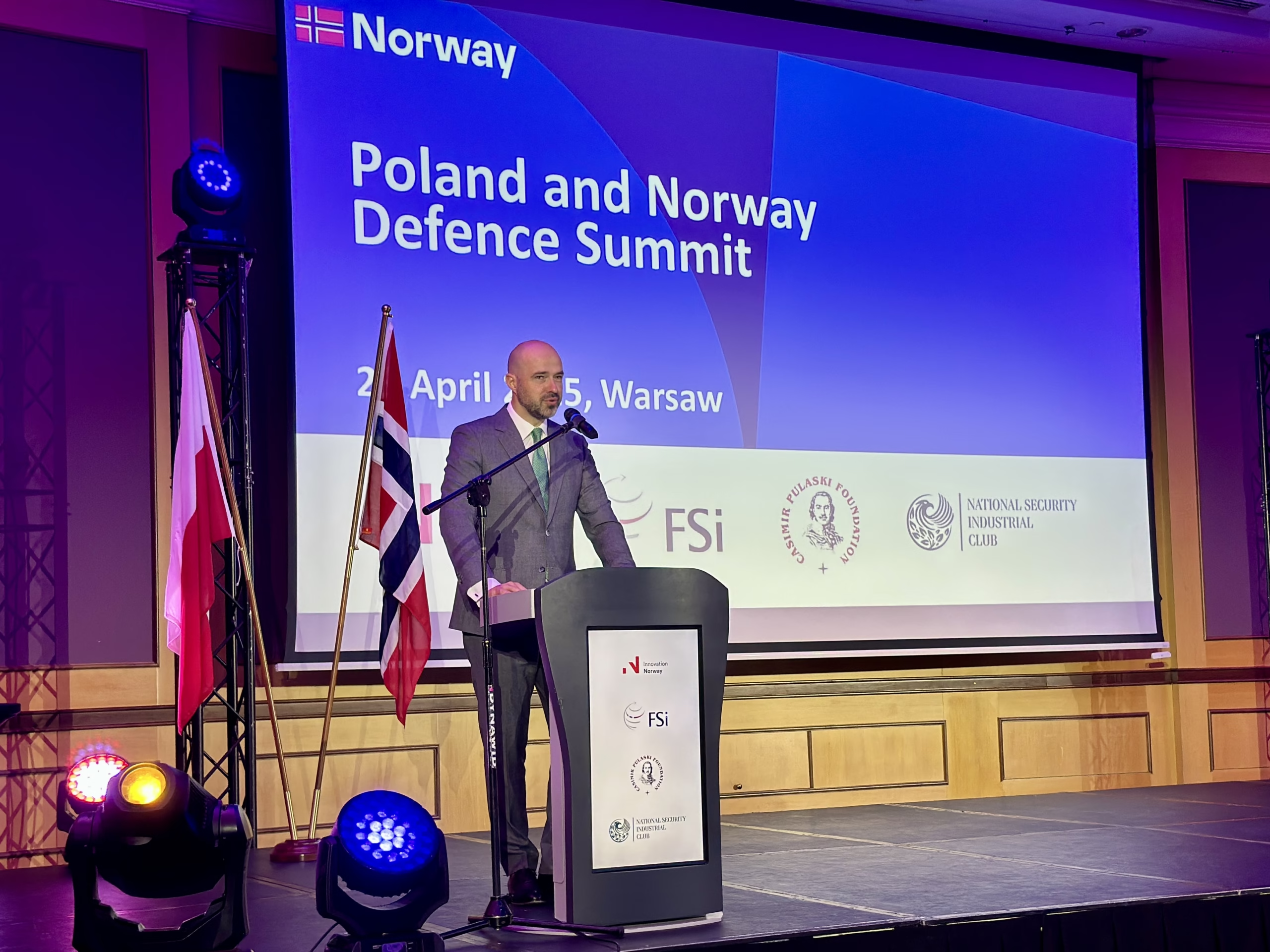
On April 23, 2025, a seminar attended by Crown Prince Haakon of Norway was held in Warsaw, organized by the Casimir Pulaski Foundation, Innovation Norway, and the Norwegian Association of Defense and Security Industry (FSi). The event was attended by, among others, Polish Minister of National Defense Władysław Kosiniak-Kamysz and Norwegian Minister of Foreign Affairs Espen Barth Eide. The main topic was Polish-Norwegian cooperation in the field of security and defense, including the possibility of establishing joint ventures and increasing interoperability within NATO.
Report on the Defense and Resilience Sectors
In 2025, we also completed work on a report analyzing the combined defense and resilience sectors. The report examines the barriers and prospects for the development of companies in industries of strategic importance to Poland’s national security. This document is the result of months of analysis and consultations with representatives from industry, government, and expert communities. Its publication is planned for the near future.
Expert Panels at the International Defence Industry Exhibition MSPO 2025
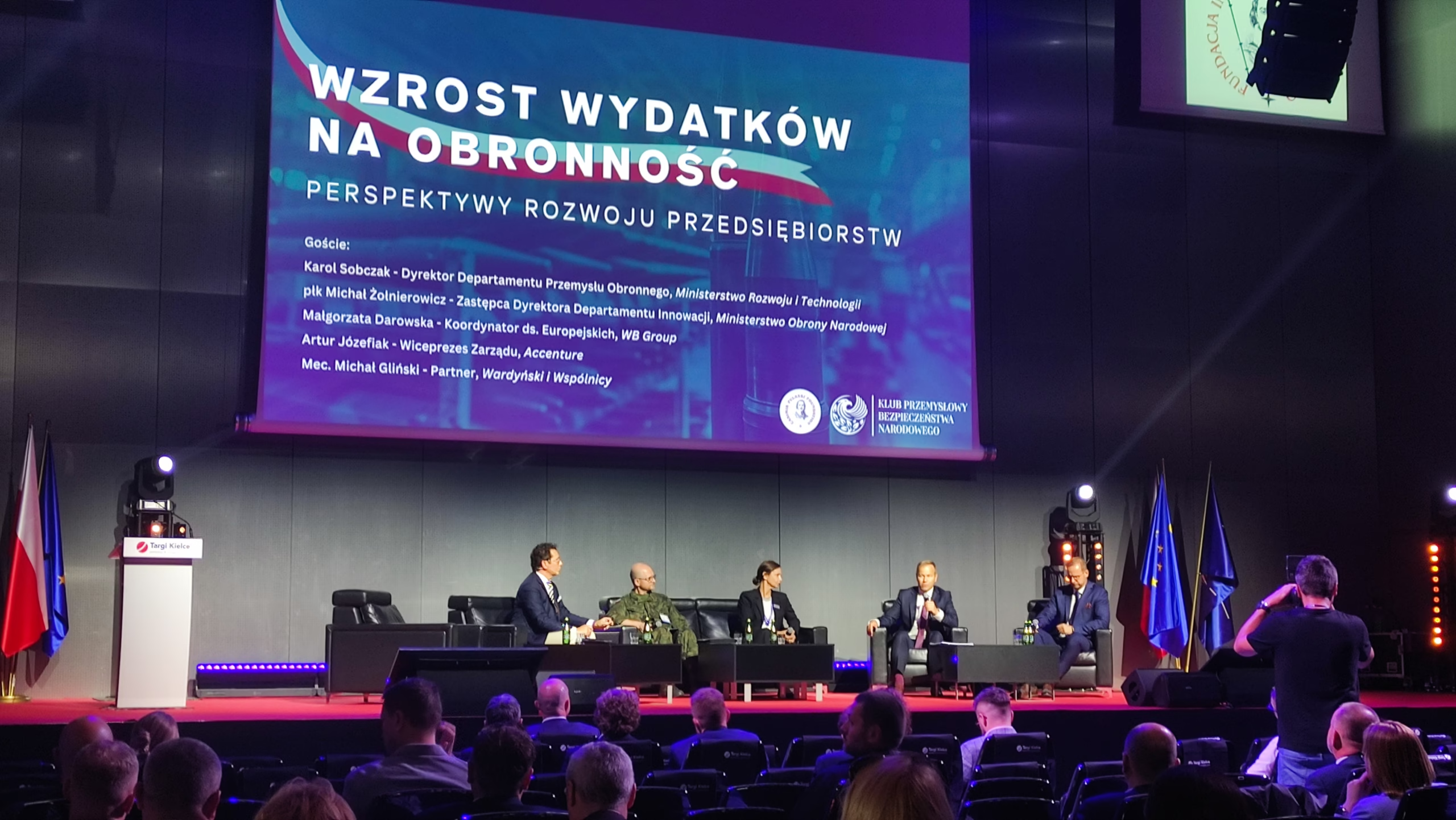
On September 3, the Casimir Pulaski Foundation, in collaboration with the National Security Industry Club, organized a seminar titled “Increased Defense Spending: An Opportunity for Polish Defense and Resilience Companies,” during which key directions for the development of the domestic security sector were discussed in three expert panels.
Panel I – “Increased Defense Spending – Prospects for Business Development” – began with the release of the report “Defense and Resilience – Prospects for Business Development,” presented by Aleksander Sala. The discussion featured: Col. Michał Żołnierowicz from the Ministry of National Defense’s Department of Innovation, Małgorzata Darowska from WB Group, Artur Józefiak from Accenture, and attorney Michał Gliński, a partner at Wardyński & Partners. The experts highlighted the growing technological and organizational needs of the defense industry.
Panel II, titled “Strategic Autonomy and Collective Defense: Poland in Europe’s New Security Architecture,” featured Konrad Gołota, Undersecretary of State at the Ministry of State Assets, who emphasized the importance of Poland’s growing role in the European security system.
During Panel III, dedicated to the ORKA submarine program, Dr. Tomasz Smura presented a report on its strategic importance for the Polish Navy and the shipbuilding industry. The discussion was attended by: Lieutenant General Krzysztof Król from the General Staff of the Polish Armed Forces, Captain Tomasz Witkiewicz from the Maritime Operations Center, and Juliusz Sabak, editor-in-chief of the defense portal.
Sixth Meeting – KPBN x Aspen Institute
On October 21, Wardyński & Partners hosted an expert panel discussion that we co-organized with the Aspen Institute – we discussed the future of the Polish defense sector and how to create stable conditions for its development. Participants included gen. dyw. Jerzy Michałowski and representatives from Teldat and Raytheon.
Seventh meeting – “Roads to Readiness: Military Mobility on NATO’s Eastern Flank”
On December 16, an expert meeting on military mobility issues was held at the headquarters of the Casimir Pulaski Foundation.
The new GLOBSEC report, “Roads to Readiness: Military Mobility Infrastructure on NATO’s Eastern Flank,” presents a comprehensive assessment of the 4,000-kilometer corridor stretching from the Baltic Sea to the Black Sea. It highlights the physical, political, and operational barriers that prevent Europe from meeting the 5- to 7-day deadlines for reinforcing NATO forces, and outlines a phased approach aimed at increasing readiness by 2030.
At a time when the EU announced its Military Mobility Package in November, and military mobility is becoming a central pillar of the upcoming EU Defence Readiness Package, this inaugural event provided a forum for experts, military personnel, and representatives of the infrastructure sector to discuss the report’s findings, the political feasibility of the proposed reforms, and the path toward an integrated, operational mobility network.
The event was attended by representatives from the expert community, public administration, the military, and the infrastructure sector. GLOBSEC experts in attendance included Martin Sklenár, former Minister of Defense of Slovakia, Marcin Zaborowski, and Karin Filkászová, the authors of the report. The Polish Armed Forces were represented by gen. broni Piotr Błazeusz, Ph.D., and Col. Sławomir Walenczynowski from the General Staff. Participants also included representatives of key infrastructure companies: Orlen, PKP Cargo Terminale, Polskie Sieci Elektroenergetyczne, and Cargotor. A representative of the Maritime Office in Gdynia also attended the meeting.
The year 2025 was a time of intensive dialogue, expert debates, and tangible influence on the shaping of Poland’s security ecosystem for the National Security Industry Club – ranging from the space sector and defense innovation, through financing and the European security architecture, to international cooperation with Norway. The KPBN sought to bring together the government, the military, and industry, initiating discussions on strategic autonomy and the development of domestic enterprises.

In 2025, the National Security Industry Club (KPBN), operating as part of the Kazimierz Pułaski Foundation, continued its mission to integrate the industrial sector with public institutions in the field of national security. By organizing a series of meetings and debates, the KPBN focused on key challenges and opportunities for the Polish defense industry and security sector.
Meeting on the Polish space sector
On January 28, 2025, a meeting dedicated to the development of the Polish space sector was held at the Law Office of Wardyński & Partners. The event was attended by representatives of institutions such as the Polish Space Agency and the Space Research Center of the Polish Academy of Sciences, as well as companies from the space industry, including Creotech, Exatel, and Thorium Space Technologies. Discussions focused on regulatory barriers, the need for investment support, and the importance of space technologies for national security. Representatives from Accenture discussed some of the findings from a report on the impact of space technologies on business development.
A meeting on the financing of the defense innovation ecosystem by venture capital funds
On March 5, 2025, a meeting was held at Accenture’s headquarters focusing on the financing of defense innovations by venture capital funds. Participants included representatives from the Ministry of Finance, the Polish Development Fund, Bank Gospodarstwa Krajowego, and investment funds such as MS TFI, Expeditions Fund, R+Global Opportunities, Balnord, OTB Ventures, and Sunfish Investments. The meeting discussed the Polish Defence Fund program and the differences in how the public and private sectors finance innovation.
A meeting titled “The White Paper on European Defense and the ReArm Europe/Readiness 2030 Plan – Implications for the Polish Defense Industry”
On April 16, 2025, a meeting was held regarding the White Paper on European Defense and the ReArm Europe/Readiness 2030 plan. Participants in the debate included representatives from the Ministry of National Defense, the Polish Armaments Group, WB Group, and the Niewiadów Group. The discussion focused on the potential benefits for the domestic defense industry resulting from European investments.
Polish-Norwegian Defense Industry Seminar
On April 23, 2025, a seminar attended by Crown Prince Haakon of Norway was held in Warsaw, organized by the Casimir Pulaski Foundation, Innovation Norway, and the Norwegian Association of Defense and Security Industry (FSi). The event was attended by, among others, Polish Minister of National Defense Władysław Kosiniak-Kamysz and Norwegian Minister of Foreign Affairs Espen Barth Eide. The main topic was Polish-Norwegian cooperation in the field of security and defense, including the possibility of establishing joint ventures and increasing interoperability within NATO.
Report on the Defense and Resilience Sectors
In 2025, we also completed work on a report analyzing the combined defense and resilience sectors. The report examines the barriers and prospects for the development of companies in industries of strategic importance to Poland’s national security. This document is the result of months of analysis and consultations with representatives from industry, government, and expert communities. Its publication is planned for the near future.
Expert Panels at the International Defence Industry Exhibition MSPO 2025
On September 3, the Casimir Pulaski Foundation, in collaboration with the National Security Industry Club, organized a seminar titled “Increased Defense Spending: An Opportunity for Polish Defense and Resilience Companies,” during which key directions for the development of the domestic security sector were discussed in three expert panels.
Panel I – “Increased Defense Spending – Prospects for Business Development” – began with the release of the report “Defense and Resilience – Prospects for Business Development,” presented by Aleksander Sala. The discussion featured: Col. Michał Żołnierowicz from the Ministry of National Defense’s Department of Innovation, Małgorzata Darowska from WB Group, Artur Józefiak from Accenture, and attorney Michał Gliński, a partner at Wardyński & Partners. The experts highlighted the growing technological and organizational needs of the defense industry.
Panel II, titled “Strategic Autonomy and Collective Defense: Poland in Europe’s New Security Architecture,” featured Konrad Gołota, Undersecretary of State at the Ministry of State Assets, who emphasized the importance of Poland’s growing role in the European security system.
During Panel III, dedicated to the ORKA submarine program, Dr. Tomasz Smura presented a report on its strategic importance for the Polish Navy and the shipbuilding industry. The discussion was attended by: Lieutenant General Krzysztof Król from the General Staff of the Polish Armed Forces, Captain Tomasz Witkiewicz from the Maritime Operations Center, and Juliusz Sabak, editor-in-chief of the defense portal.
Sixth Meeting – KPBN x Aspen Institute
On October 21, Wardyński & Partners hosted an expert panel discussion that we co-organized with the Aspen Institute – we discussed the future of the Polish defense sector and how to create stable conditions for its development. Participants included gen. dyw. Jerzy Michałowski and representatives from Teldat and Raytheon.
Seventh meeting – “Roads to Readiness: Military Mobility on NATO’s Eastern Flank”
On December 16, an expert meeting on military mobility issues was held at the headquarters of the Casimir Pulaski Foundation.
The new GLOBSEC report, “Roads to Readiness: Military Mobility Infrastructure on NATO’s Eastern Flank,” presents a comprehensive assessment of the 4,000-kilometer corridor stretching from the Baltic Sea to the Black Sea. It highlights the physical, political, and operational barriers that prevent Europe from meeting the 5- to 7-day deadlines for reinforcing NATO forces, and outlines a phased approach aimed at increasing readiness by 2030.
At a time when the EU announced its Military Mobility Package in November, and military mobility is becoming a central pillar of the upcoming EU Defence Readiness Package, this inaugural event provided a forum for experts, military personnel, and representatives of the infrastructure sector to discuss the report’s findings, the political feasibility of the proposed reforms, and the path toward an integrated, operational mobility network.
The event was attended by representatives from the expert community, public administration, the military, and the infrastructure sector. GLOBSEC experts in attendance included Martin Sklenár, former Minister of Defense of Slovakia, Marcin Zaborowski, and Karin Filkászová, the authors of the report. The Polish Armed Forces were represented by gen. broni Piotr Błazeusz, Ph.D., and Col. Sławomir Walenczynowski from the General Staff. Participants also included representatives of key infrastructure companies: Orlen, PKP Cargo Terminale, Polskie Sieci Elektroenergetyczne, and Cargotor. A representative of the Maritime Office in Gdynia also attended the meeting.
The year 2025 was a time of intensive dialogue, expert debates, and tangible influence on the shaping of Poland’s security ecosystem for the National Security Industry Club – ranging from the space sector and defense innovation, through financing and the European security architecture, to international cooperation with Norway. The KPBN sought to bring together the government, the military, and industry, initiating discussions on strategic autonomy and the development of domestic enterprises.