KPBN podsumowanie
Autor foto: Fundacja im. Kazimierza Pułaskiego
“Roads to Readiness: Military Mobility on NATO’s Eastern Flank” Report
Published: December 16, 2025

KPBN podsumowanie
Autor foto: Fundacja im. Kazimierza Pułaskiego
“Roads to Readiness: Military Mobility on NATO’s Eastern Flank” Report
Opublikowano: December 16, 2025
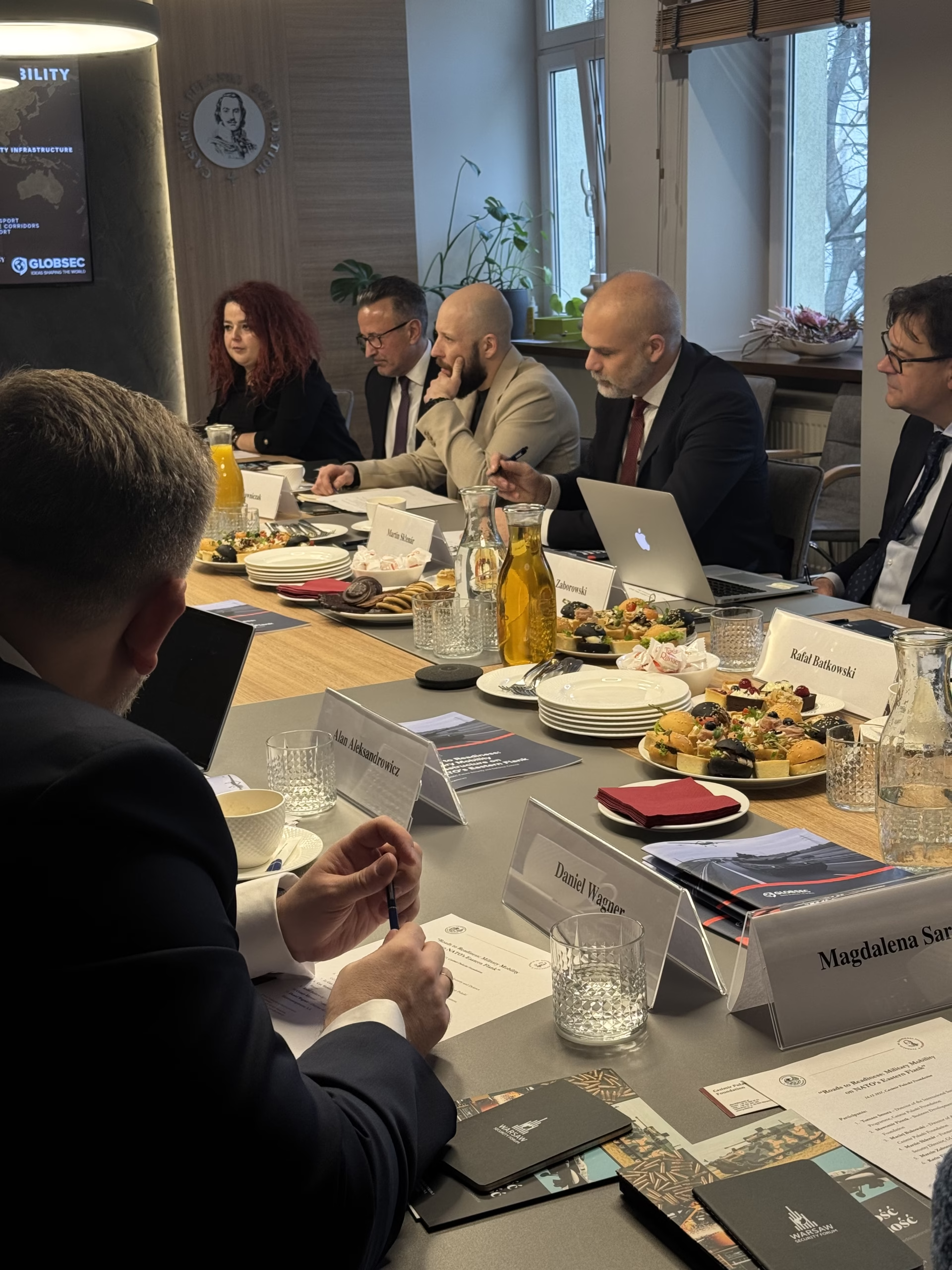
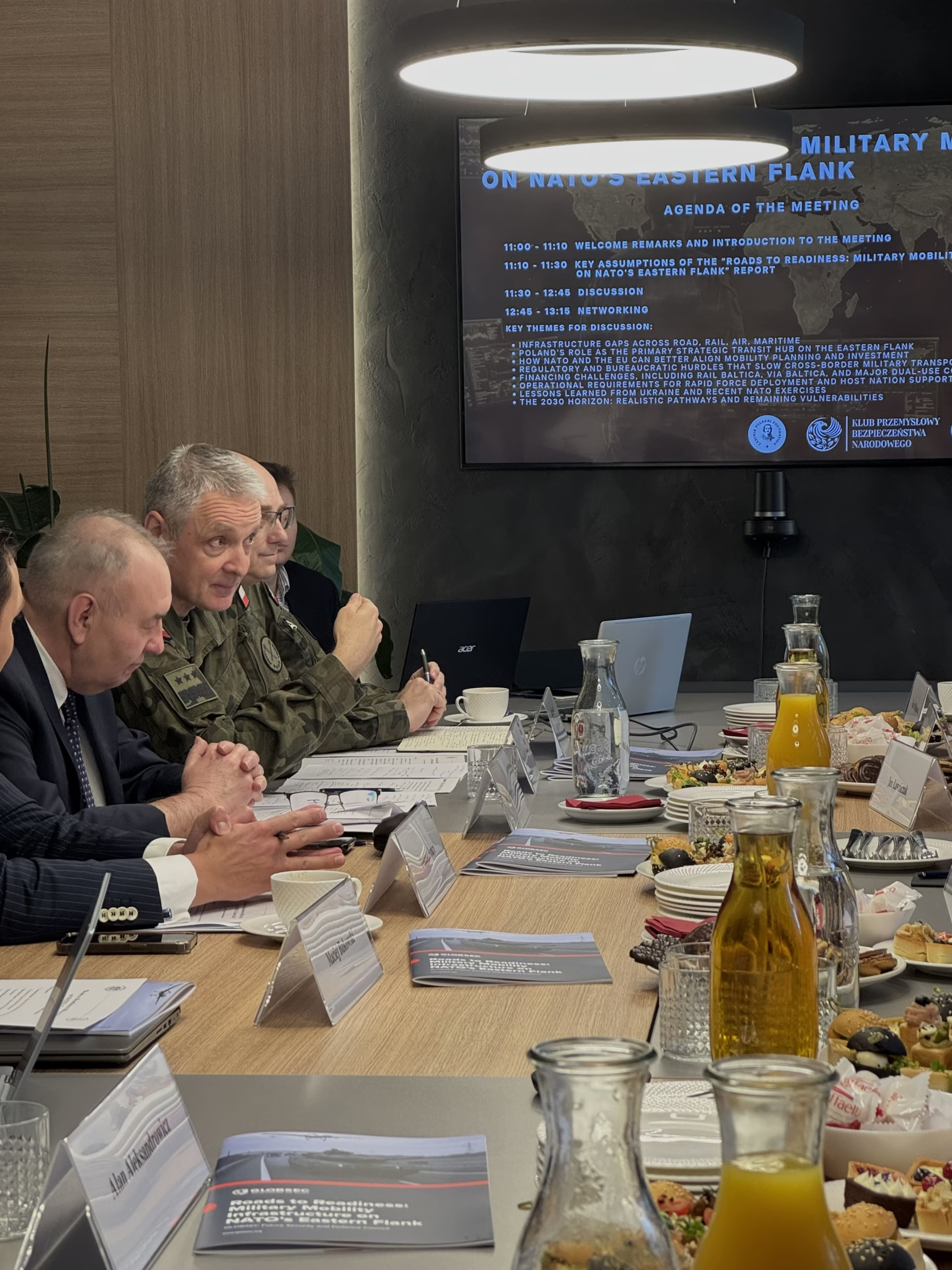
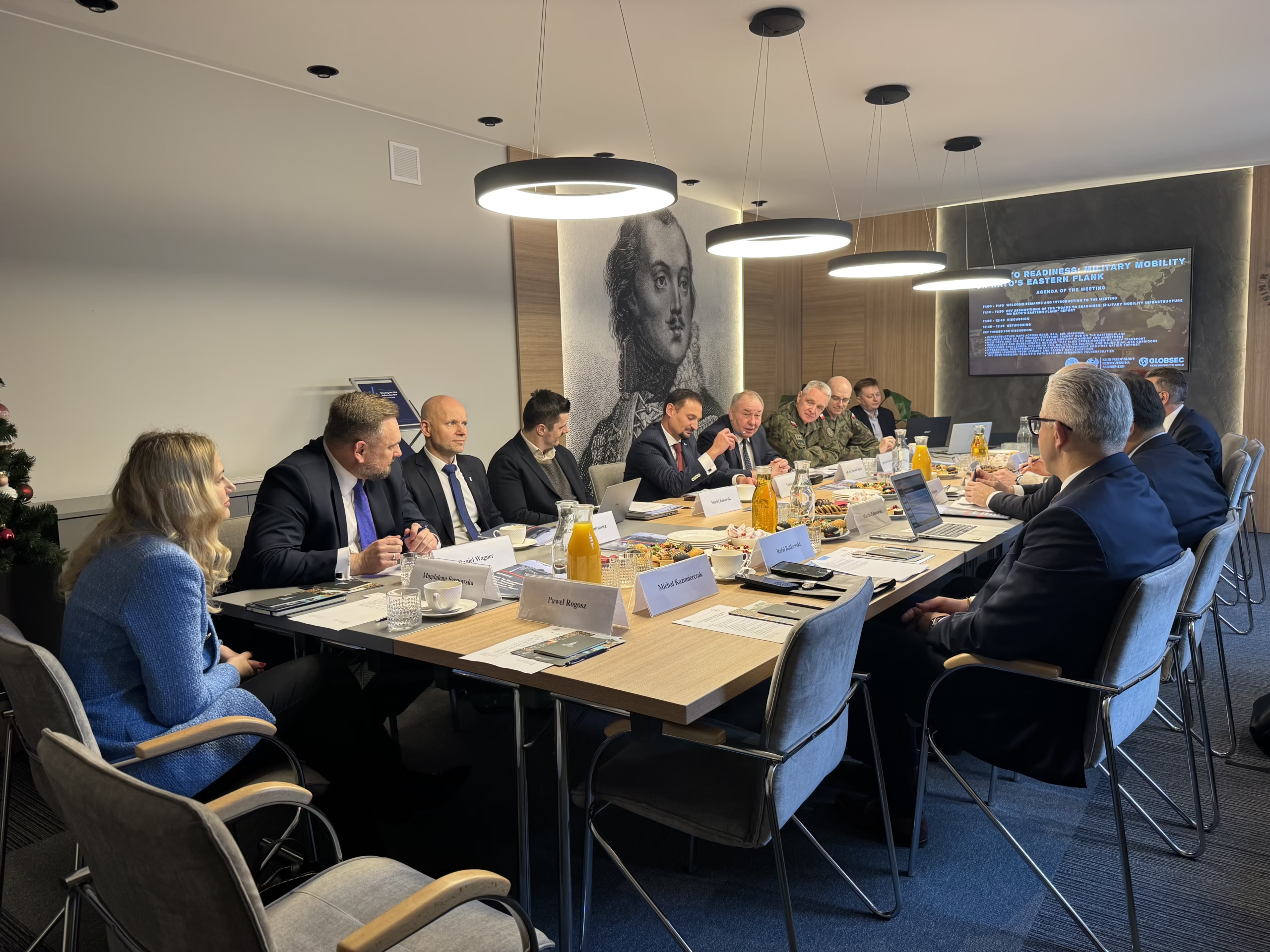
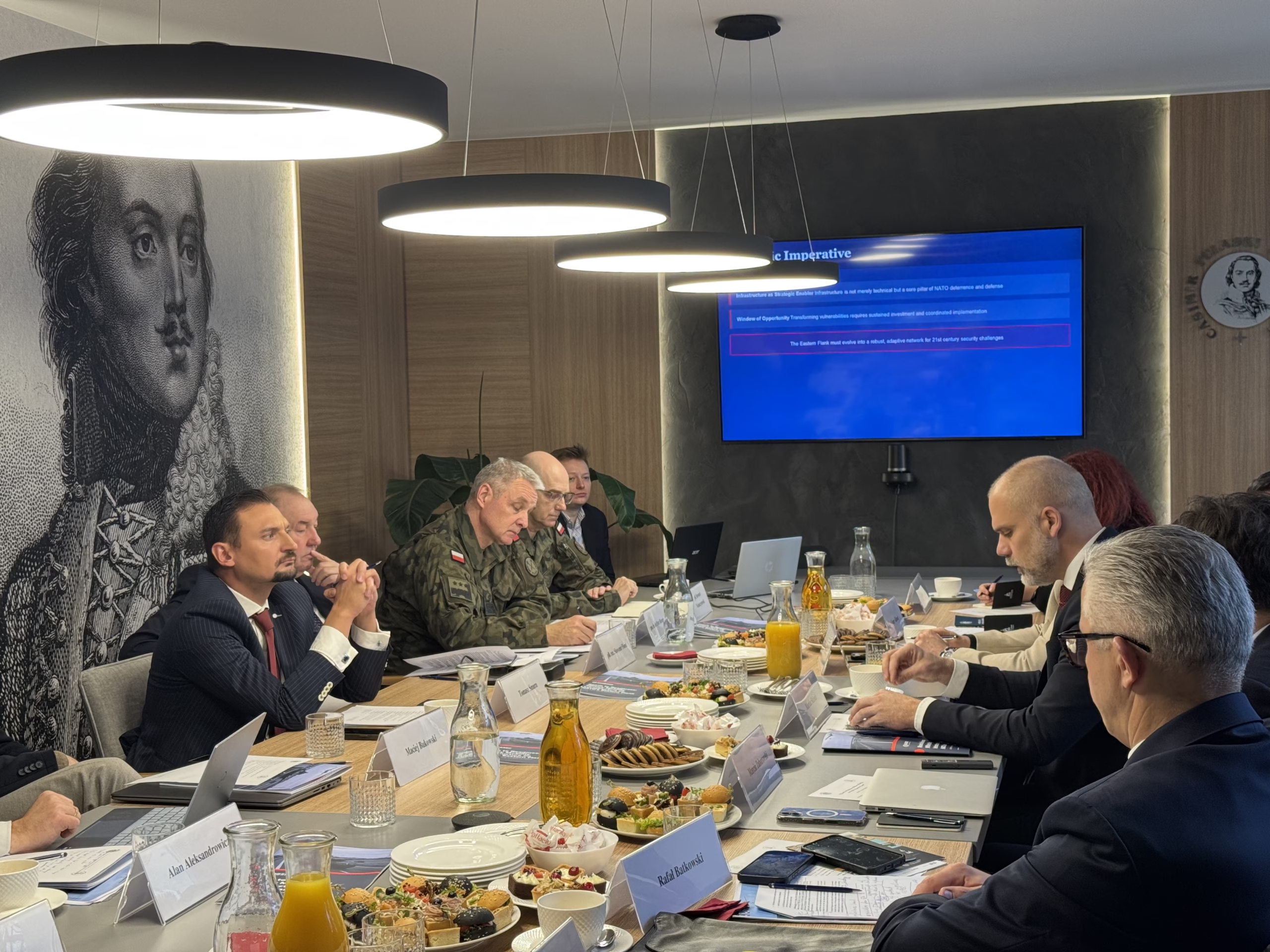
On 16 December, an expert meeting devoted to Military Mobility was held at the headquarters of the Casimir Pulaski Foundation. The roundtable discussion was jointly organised by the Foundation, the National Security Industrial Club and GLOBSEC.
The new GLOBSEC report, “Roads to Readiness: Military Mobility Infrastructure on NATO’s Eastern Flank,” presents a comprehensive assessment to date of a 4,000-kilometre corridor stretching from the Baltic Sea to the Black Sea. The report highlights the physical, political, and operational barriers that prevent Europe from meeting NATO’s 5–7-day force reinforcement timelines and outlines a phased approach aimed at increasing readiness by 2030.
As the EU announced its Military Mobility Package in November and military mobility becomes a central pillar of the forthcoming EU Defence Readiness Package, this inaugural event created a platform for discussing the report’s findings, the political feasibility of the proposed reforms, and pathways toward an integrated and operational military mobility network. The discussion brought together experts, military representatives, and stakeholders from the infrastructure sector.
Participants included representatives of the expert community, public administration, the armed forces, and critical infrastructure sectors. The Casimir Pulaski Foundation was represented by Tomasz Smura, Director of the Security and Defence Programme; Maciej Bukowski, Director of the Energy Security and Resilience Programme; and Sławomir Florek, Director of Business Development. GLOBSEC experts in attendance included Martin Sklenár, former Minister of Defence of Slovakia, Marcin Zaborowski, and Karin Filkászová, the authors of the report. The Polish Armed Forces were represented by Lt. Gen. Dr Piotr Błazeusz and Col. Sławomir Walenczynowski from the General Staff of the Polish Armed Forces. The meeting also gathered representatives of key infrastructure companies, including Orlen, PKP Cargo Terminale, Polskie Sieci Elektroenergetyczne, Port of Gdańsk, and Cargotor. Maritime Office in Gdynia also participated in the discussion.
The meeting confirmed that military mobility is currently one of the key challenges for the security of NATO’s Eastern Flank and for Europe’s overall defence architecture. The discussion underscored the urgent need for coordinated action at the intersection of policy, military planning, and critical infrastructure, as well as the importance of long-term investments and the simplification of administrative procedures. The conclusions drawn from the GLOBSEC report, together with the perspectives of experts and practitioners, clearly indicated that only an integrated approach—encompassing cooperation among states, EU institutions, and the private sector—will enable the achievement of genuine operational readiness by 2030 and effectively strengthen NATO’s deterrence and response capabilities.
On 16 December, an expert meeting devoted to Military Mobility was held at the headquarters of the Casimir Pulaski Foundation. The roundtable discussion was jointly organised by the Foundation, the National Security Industrial Club and GLOBSEC.
The new GLOBSEC report, “Roads to Readiness: Military Mobility Infrastructure on NATO’s Eastern Flank,” presents a comprehensive assessment to date of a 4,000-kilometre corridor stretching from the Baltic Sea to the Black Sea. The report highlights the physical, political, and operational barriers that prevent Europe from meeting NATO’s 5–7-day force reinforcement timelines and outlines a phased approach aimed at increasing readiness by 2030.
As the EU announced its Military Mobility Package in November and military mobility becomes a central pillar of the forthcoming EU Defence Readiness Package, this inaugural event created a platform for discussing the report’s findings, the political feasibility of the proposed reforms, and pathways toward an integrated and operational military mobility network. The discussion brought together experts, military representatives, and stakeholders from the infrastructure sector.
Participants included representatives of the expert community, public administration, the armed forces, and critical infrastructure sectors. The Casimir Pulaski Foundation was represented by Tomasz Smura, Director of the Security and Defence Programme; Maciej Bukowski, Director of the Energy Security and Resilience Programme; and Sławomir Florek, Director of Business Development. GLOBSEC experts in attendance included Martin Sklenár, former Minister of Defence of Slovakia, Marcin Zaborowski, and Karin Filkászová, the authors of the report. The Polish Armed Forces were represented by Lt. Gen. Dr Piotr Błazeusz and Col. Sławomir Walenczynowski from the General Staff of the Polish Armed Forces. The meeting also gathered representatives of key infrastructure companies, including Orlen, PKP Cargo Terminale, Polskie Sieci Elektroenergetyczne, Port of Gdańsk, and Cargotor. Maritime Office in Gdynia also participated in the discussion.
The meeting confirmed that military mobility is currently one of the key challenges for the security of NATO’s Eastern Flank and for Europe’s overall defence architecture. The discussion underscored the urgent need for coordinated action at the intersection of policy, military planning, and critical infrastructure, as well as the importance of long-term investments and the simplification of administrative procedures. The conclusions drawn from the GLOBSEC report, together with the perspectives of experts and practitioners, clearly indicated that only an integrated approach—encompassing cooperation among states, EU institutions, and the private sector—will enable the achievement of genuine operational readiness by 2030 and effectively strengthen NATO’s deterrence and response capabilities.