
Zamelek_Monografia_Fundacja_Pulaskiego_1600x900
Autor foto: Fundacja im. Kazimierza Pułaskiego
Pulaski Foundation Recommends – “The Defence Industry in Developing the European Union’s Security and Military Capabilities”
Published: November 26, 2026
Zamelek_Monografia_Fundacja_Pulaskiego_1600x900
Autor foto: Fundacja im. Kazimierza Pułaskiego
Pulaski Foundation Recommends – “The Defence Industry in Developing the European Union’s Security and Military Capabilities”
Opublikowano: November 26, 2026
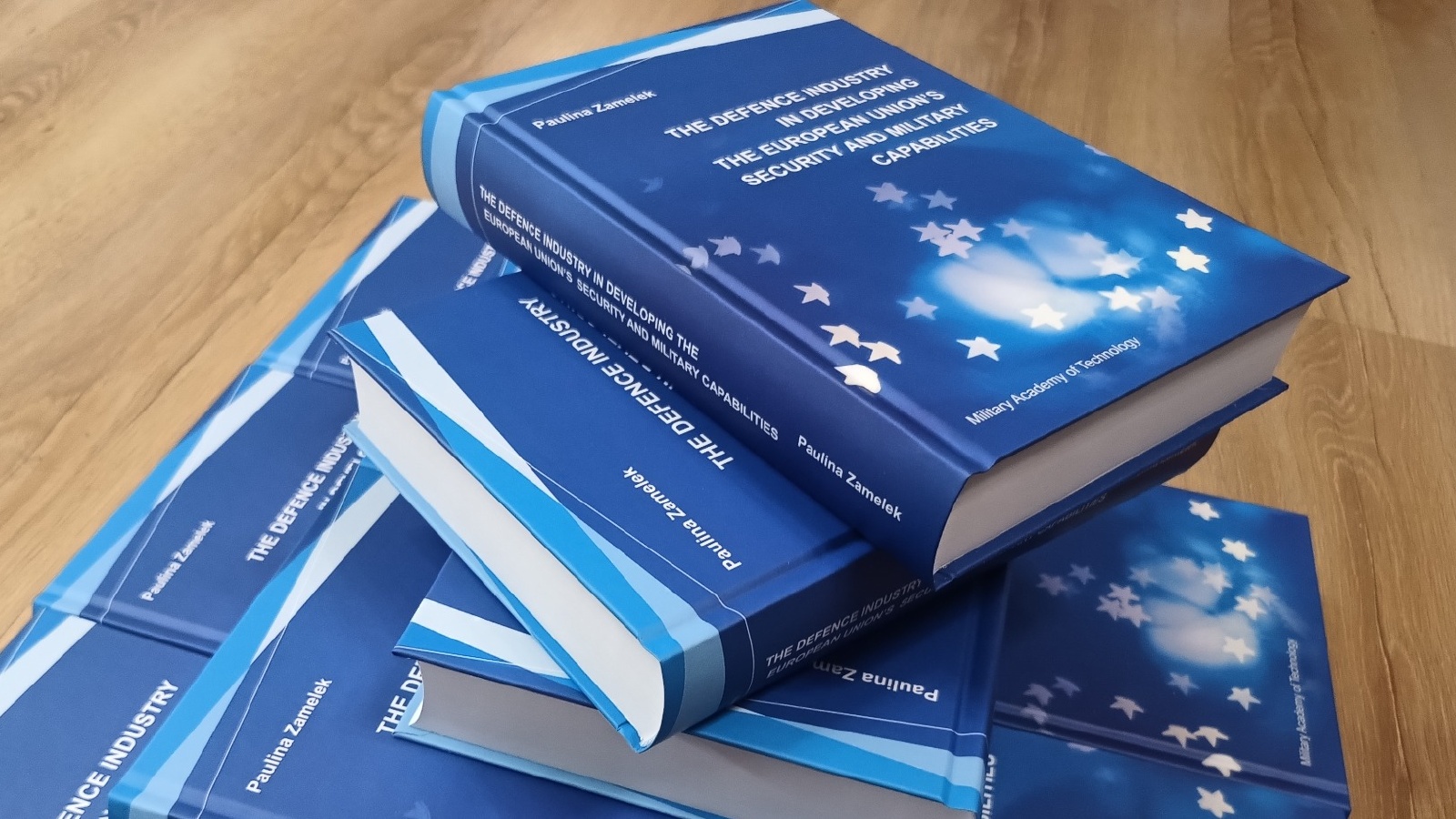
The English-language edition of The Defence Industry in Developing the European Union’s Security and Military Capabilities by Dr Paulina Zamelek, Senior Fellow at the Casimir Pulaski Foundation, has been published by the Military University of Technology (WAT), Warsaw. The book examines the conditions under which Europe’s defence industry translates security policy objectives into capabilities that can be developed, delivered and sustained.
Acquiring a weapon system begins a long-term commitment to keeping it operational. Access to spare parts, technical support and opportunities for modernisation helps determine its military value. The monograph connects this perspective with public decision-making and industrial organisation, examining the importance of cooperation throughout the equipment life cycle.
Covering the period 2014–2025, the research brings together analysis of EU and NATO documents, case studies and an original survey of 101 respondents from policymaking, industry and the research community.
The book’s policy–industry–processes framework (3P) traces the links between strategic decisions and the practical delivery and sustainment of equipment. Its accompanying 6C matrix organises the assessment of supply-chain resilience around capacity, connectivity, control, compliance, continuity and cost. These analytical tools connect questions about expenditure with the assessment of readiness, availability and interoperability.
A central theme is the relationship between cooperation and autonomy. Joint projects can widen access to technology and increase production scale. Their strategic value also depends on where critical expertise resides, who controls essential supply-chain links and what arrangements keep deliveries and support functioning when disruption occurs.
The six chapters explore defence industry and market structures, capability development, the roles of institutions and enterprises, research and production cooperation, strategic supply-chain dependencies, and systemic changes across the sector. The book offers a shared basis for discussion among those working in defence policy, procurement, industry and security research.
For availability and ordering details, please contact the publisher (Wydawnictwo WAT) directly or enquire with an academic bookseller, specifying the English-language edition.