
Asia Research Center
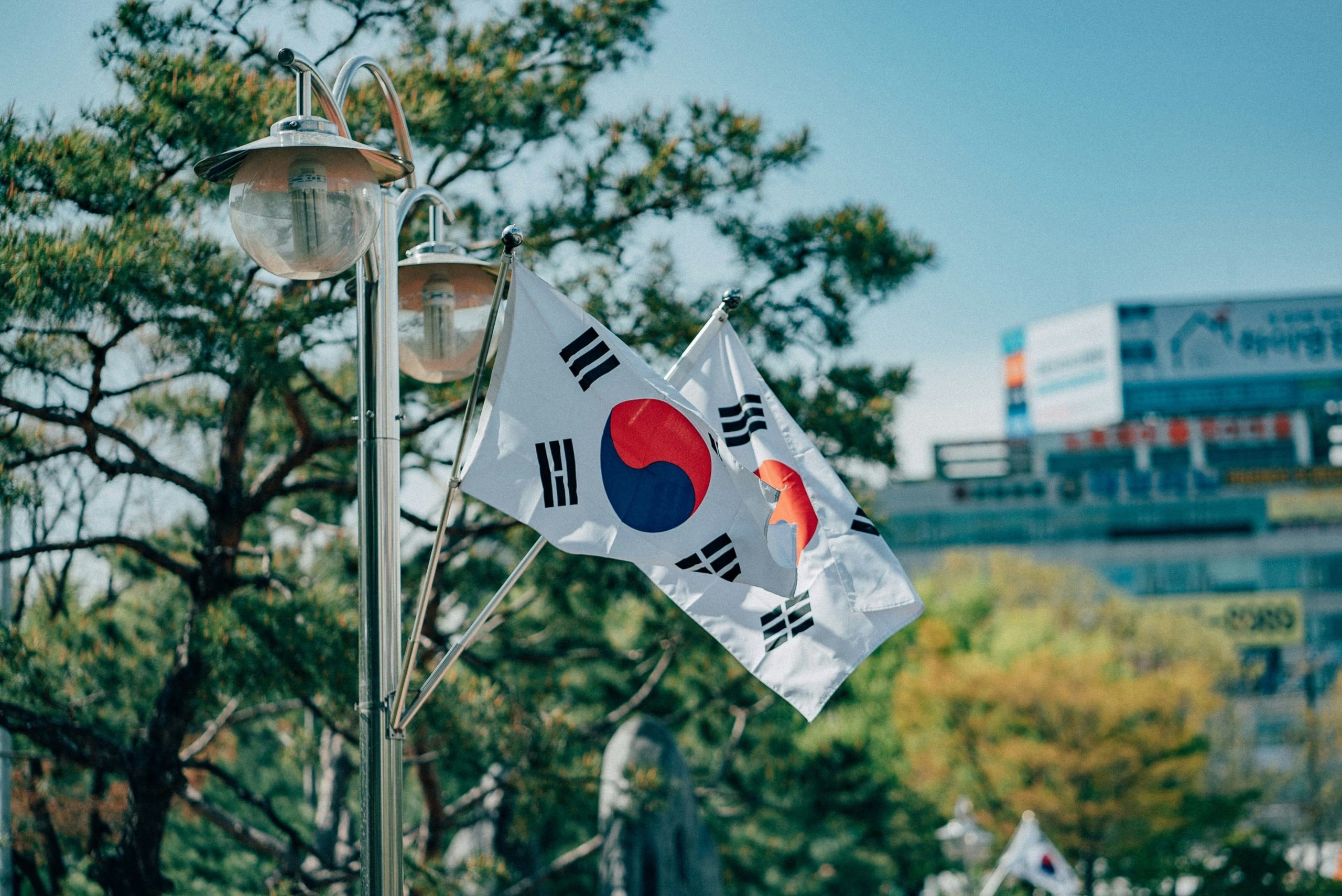
Autor foto: Daniel Bernard via Unsplash
Asia Research Center – Year #1 Summary
Published: February 19, 2026
Asia Research Center
Autor foto: Daniel Bernard via Unsplash
Asia Research Center – Year #1 Summary
Opublikowano: February 19, 2026
Casimir Pulaski Foundation — Asia Research Center Year #1 Activities
The Casimir Pulaski Foundation’s Asia Research Center initiative endeavoured to spearhead the research into joint perspectives between Poland and the Asia-Pacific. The first year of work under this project was geared towards two parallel activities. One was – to the extent possible – provide a set of monographs that would touch on the issues of how the ROK’s increasing business in defence technology and weapon systems with Poland was of benefit to both nations.
The second was to generate reporting and papers that illustrated how the war in Ukraine on Poland’s doorstep and developments elsewhere in the world are of significance to both the ROK and Poland. An example would be that Vladimir Putin has received thousands of North Korean troops and millions of rounds of munitions to support his armies fighting in Ukraine. As payback for that assistance the DPRK is receiving a steady stream of defence technology and advanced weaponry from Russia, which exacerbates the threat to the ROK.
The themes of the FKP Policy Papers that were produced in this time were:
• DPRK-Russia Military Cooperation
• Election in South Korea — influence on US-ROK-Japan Cooperation
• Election in South Korea — influence on DPRK-ROK relations
• New Axis of Evil — Russia, China, Iran, North Korea vs the West
• Opportunities for military Cooperation of ROK with CEE nation states
They were supplemented by a more in-depth report on Polish Korean Defence Cooperation, which was printed and bound and given a dissemination across the defence and foreign affairs community in Poland.
Other than these deliverables, there was a Panel Discussion conducted during the late September Warsaw Security Forum (WSF) 2025. Prior to the WSF there were separate, off-line briefings conducted with specialists from the Ministry of Foreign Affairs (MFA) unit responsible for reporting and assessments of Russia, Ukraine and the CEE region.
In November, FKP made a study visit to the ROK where follow-up meetings were held with MFA, firms that are defence-industrial partners with Poland, local specialists and the state-funded Korean Institute for Defence Analyses (KIDA).
A round table in Warsaw was then organised in early February 2026 to discuss and present findings on the strategic implications of ROK-Poland defence industrial cooperation.
At present work is underway to detail the activities and course of a research plan for the year 2026-2027 for the second year of the Asia Research Center.
Supported by the Korea Foundation
Casimir Pulaski Foundation — Asia Research Center Year #1 Activities
The Casimir Pulaski Foundation’s Asia Research Center initiative endeavoured to spearhead the research into joint perspectives between Poland and the Asia-Pacific. The first year of work under this project was geared towards two parallel activities. One was – to the extent possible – provide a set of monographs that would touch on the issues of how the ROK’s increasing business in defence technology and weapon systems with Poland was of benefit to both nations.
The second was to generate reporting and papers that illustrated how the war in Ukraine on Poland’s doorstep and developments elsewhere in the world are of significance to both the ROK and Poland. An example would be that Vladimir Putin has received thousands of North Korean troops and millions of rounds of munitions to support his armies fighting in Ukraine. As payback for that assistance the DPRK is receiving a steady stream of defence technology and advanced weaponry from Russia, which exacerbates the threat to the ROK.
The themes of the FKP Policy Papers that were produced in this time were:
• DPRK-Russia Military Cooperation
• Election in South Korea — influence on US-ROK-Japan Cooperation
• Election in South Korea — influence on DPRK-ROK relations
• New Axis of Evil — Russia, China, Iran, North Korea vs the West
• Opportunities for military Cooperation of ROK with CEE nation states
They were supplemented by a more in-depth report on Polish Korean Defence Cooperation, which was printed and bound and given a dissemination across the defence and foreign affairs community in Poland.
Other than these deliverables, there was a Panel Discussion conducted during the late September Warsaw Security Forum (WSF) 2025. Prior to the WSF there were separate, off-line briefings conducted with specialists from the Ministry of Foreign Affairs (MFA) unit responsible for reporting and assessments of Russia, Ukraine and the CEE region.
In November, FKP made a study visit to the ROK where follow-up meetings were held with MFA, firms that are defence-industrial partners with Poland, local specialists and the state-funded Korean Institute for Defence Analyses (KIDA).
A round table in Warsaw was then organised in early February 2026 to discuss and present findings on the strategic implications of ROK-Poland defence industrial cooperation.
At present work is underway to detail the activities and course of a research plan for the year 2026-2027 for the second year of the Asia Research Center.
Supported by the Korea Foundation