Eastern Partnership 2.0
Autor foto: Casimir Pulaski Foundation
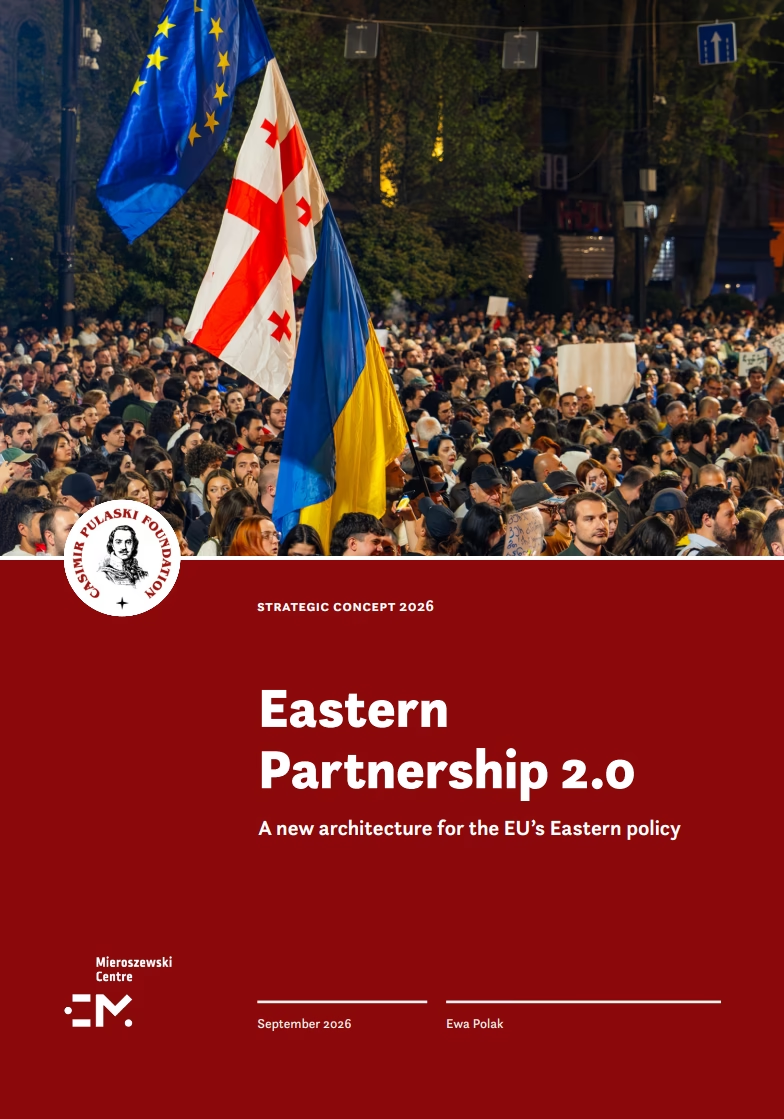
Eastern Partnership 2.0. A new architecture for the EU’s Eastern policy
October 26, 2026
Author: Ewa Polak


Eastern Partnership 2.0
Autor foto: Casimir Pulaski Foundation
Eastern Partnership 2.0. A new architecture for the EU’s Eastern policy
Author: Ewa Polak
Published: October 26, 2026
The Eastern Partnership enters its seventeenth year in 2026 at the confluence of several processes of fundamental importance for its future: the trajectories of the six partner states – Armenia, Azerbaijan, Belarus, Georgia, Moldova and Ukraine – are diverging today more than ever – ranging from the opening of successive accession negotiation clusters, through new partnership frameworks, to the effective freezing of cooperation. Russia’s war against Ukraine continues to define the security conditions of the entire continent, while the erosion of the existing international order and the growing presence of China, Turkey and the Gulf states in the region are forcing the EU to revise its own approach to Eastern policy – an approach whose financial instruments will be defined in the ongoing negotiations, now entering a decisive phase, on the EU’s Multiannual Financial Framework for 2028–2034.
The concept presented in the remainder of this document, together with recommendations for its implementation in the ongoing budget negotiations, is intended to enable the European Union to meet the challenges described above and to build with its Eastern neighbours a lasting partnership, based on mutual benefit and capable of strengthening the security of the whole continent.
Project co-funded by the Mieroszewski Centre under the 4th Open Call for Proposals