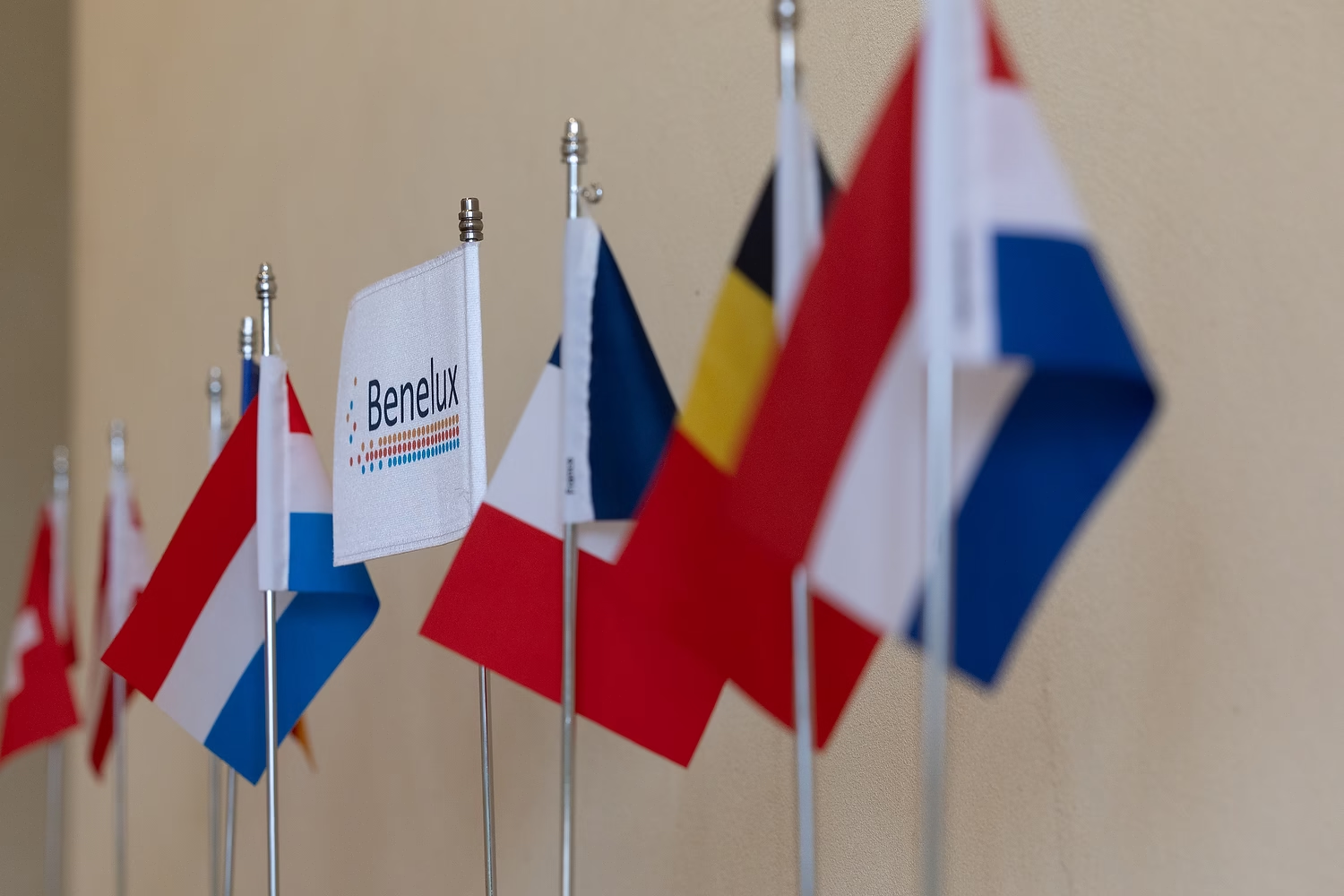
Remich – Caves Desom – Verre de l’amitié
Autor foto: © General Secretariat of the Benelux Union
Cooperation Between Poland and the Benelux Countries in the Field of Security and Defense: An Opportunity to Break the Stagnation?
July 23, 2026
Author: Wiktoria Barteczko

Remich – Caves Desom – Verre de l’amitié
Autor foto: © General Secretariat of the Benelux Union
Cooperation Between Poland and the Benelux Countries in the Field of Security and Defense: An Opportunity to Break the Stagnation?
Author: Wiktoria Barteczko
Published: July 23, 2026
A shift in the approach to defense policy in Western European countries (including growing investments in the modernization of the armed forces, the development of civil defense, the expansion of national defense industrial bases, and engagement in supporting Ukraine) presents an opportunity to build new partnerships, and consequently – generating new synergies and interoperability, as well as strengthening NATO’s European pillar. As J.J. Anderson emphasized in his analysis for the European Union Institute for Security Studies, smaller, regional/multilateral, and bilateral formats of military cooperation (of which there are currently about 200) serve as a key driving force and motivation for improving operational capabilities and planning, creating a complex but useful network for enhancing combat readiness. This view was confirmed by research published by the same institution in February 2026, according to which bilateral and minilateral cooperation “clusters” are an effective way to enhance European defense capabilities and advance joint weapons procurement initiatives, building interoperability, and enhancing operational coordination2. Poland’s objective – particularly given its experience with the dynamic expansion of its armed forces, the defense of the European Union’s (EU) and NATO’s eastern flank, as well as its increasingly evident ambitions in the area of acquiring new technologies for weapons production – should be to increase its involvement in such forms of cooperation, going beyond its immediate neighborhood and opening up to relations with countries where a significant shift in the approach to security and defense policy is just beginning to take place, and which – despite shortcomings in conventional military strength – may possess significant capabilities that have been or have been less visible so far in our part of the continent (e.g., expertise in military research and technological innovations for the military). Such opportunities are offered by deepening relations with the Benelux countries (Belgium, the Netherlands3, and Luxembourg), which – taking into account the specific characteristics of their strategic cultures, areas of specialization, and approaches to reforming their own armed forces – could become a new and important avenue for influence.
Cooperation between Poland and the Benelux countries has traditionally focused on the political and economic dimensions, with particular emphasis on trade, the development of business ties, coordination at the European Union level, and joint declarations within minilateral frameworks (the Benelux Union and the Visegrad Group). Due to significant reductions in the size of their armed forces, as well as years of reduced defense spending following the end of the Cold War, the Benelux countries have traditionally been viewed as so-called “free riders” within the North Atlantic Treaty Organization (NATO), focusing in particular on developing joint security and defense projects with their closest neighbors (Germany and France), counterterrorism and expeditionary missions, as well as investments in niche innovations for the armed forces. Cooperation between Poland and the Benelux countries thus remained limited, confined to select multilateral initiatives involving other EU and NATO allies. The reality of Russia’s full-scale invasion of Ukraine in 2022, rising defense spending across Europe, and the Benelux countries’ commitment to strengthening EU capabilities (particularly in the context of expanding the defense industrial base and scientific research, as well as cross-border military projects), have made these countries a valuable direction for Poland in the coming years for developing new forms of cooperation and investment, as well as a point of reference and an opportunity to mutually benefit from best practices and experience.
First and foremost, it is important to emphasize that both the issue of Poland-Benelux cooperation and the transformation of security and defense policies in Belgium, the Netherlands, and Luxembourg are virtually absent from expert and academic discourse in our country. Therefore, in order to fully capture the political and strategic context influencing these mutual relations, we have opted for a more detailed presentation of the background, including the strategic objectives of the Benelux countries, their efforts to modernize their armed forces in recent years, and the state of their bilateral and minilateral partnerships.