
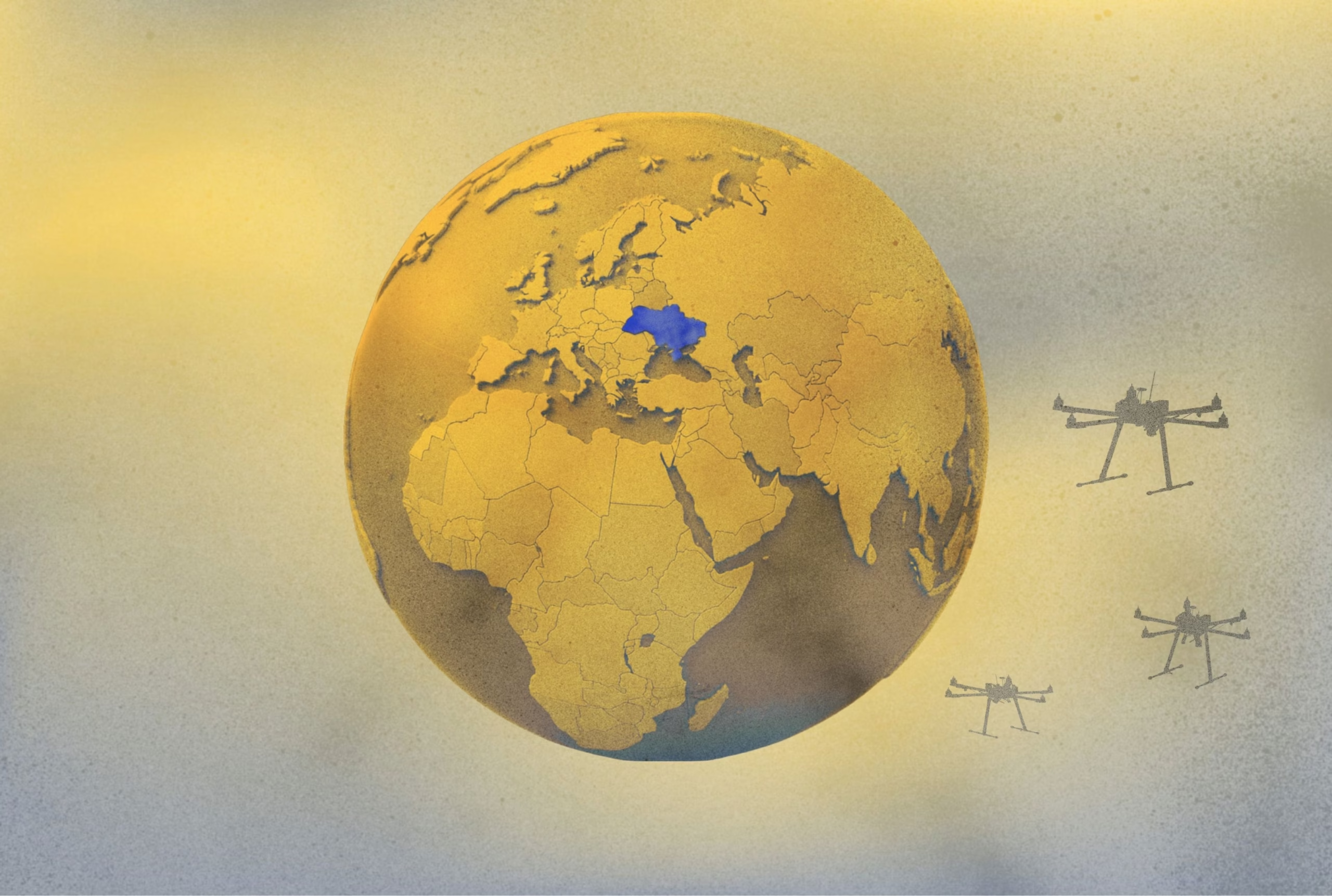
In late March 2026, a month after the outbreak of the war with Iran, Volodymyr Zelensky toured Jeddah, Abu Dhabi, Doha and Amman in three days. With Saudi Arabia, the United Arab Emirates, Qatar and Jordan he signed defence cooperation agreements providing for joint investment, joint production and the sharing of experience and solutions in defence against missiles and unmanned aircraft.
Author: Maciej Dachowski
Published: 20/08/2026


In recent months we have been witnessing a very significant shift in international relations. What is changing is the way states build their position in the international system. A growing number of middle powers no longer organise their entire strategy around a single centre, nor do they treat relations with competing great powers as mutually exclusive.
Author: Maciej Dachowski
Published: 17/08/2026
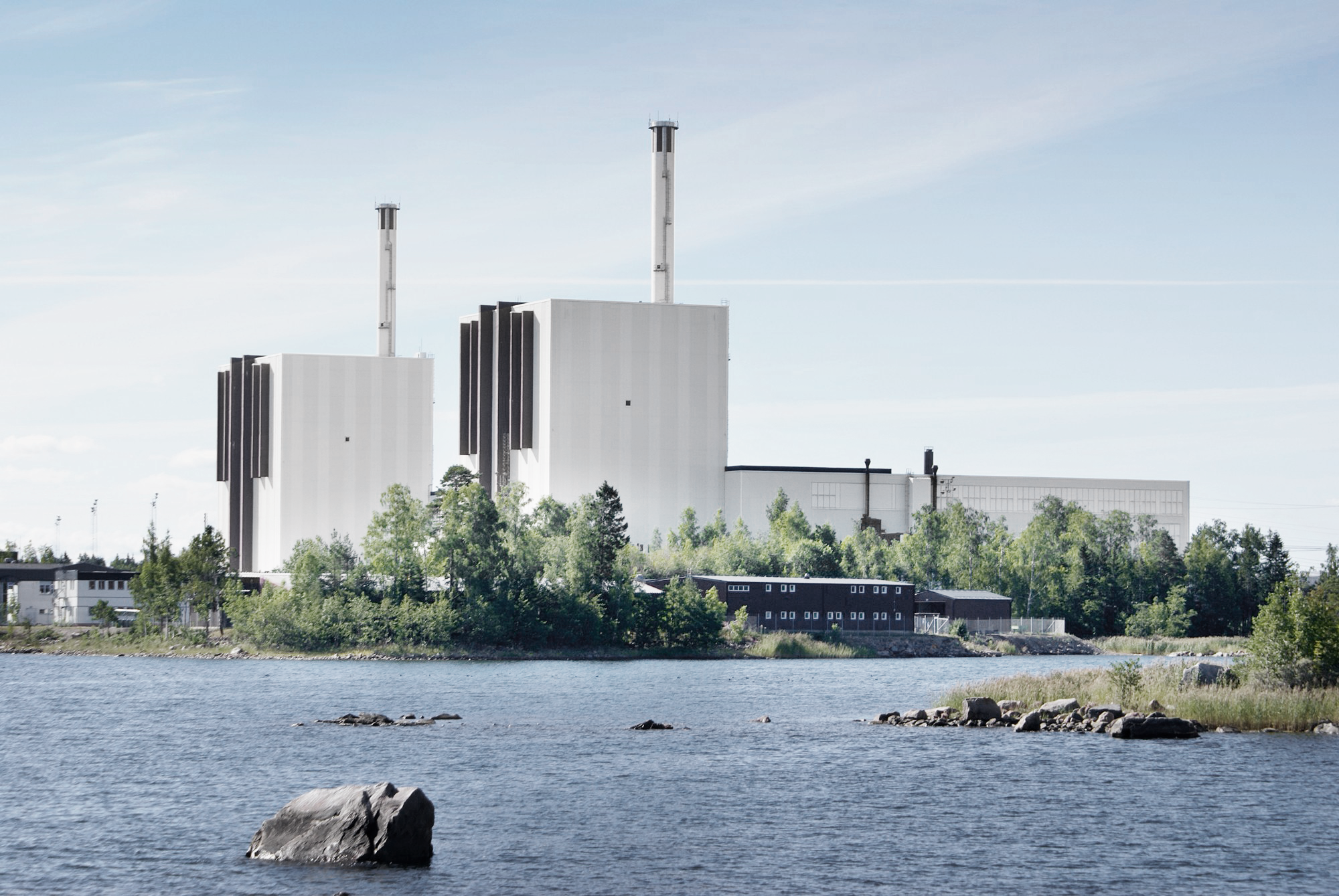
Few countries have reversed course on energy policy as decisively as Sweden. In the space of just a few years, the country has moved from planning the gradual phase-out of nuclear power to placing it at the centre of its long-term energy strategy.
Author: Karolina Pawlik, Adam Żyłka
Published: 10/08/2026

Author: Reuben F. Johnson
Published: 29/07/2026

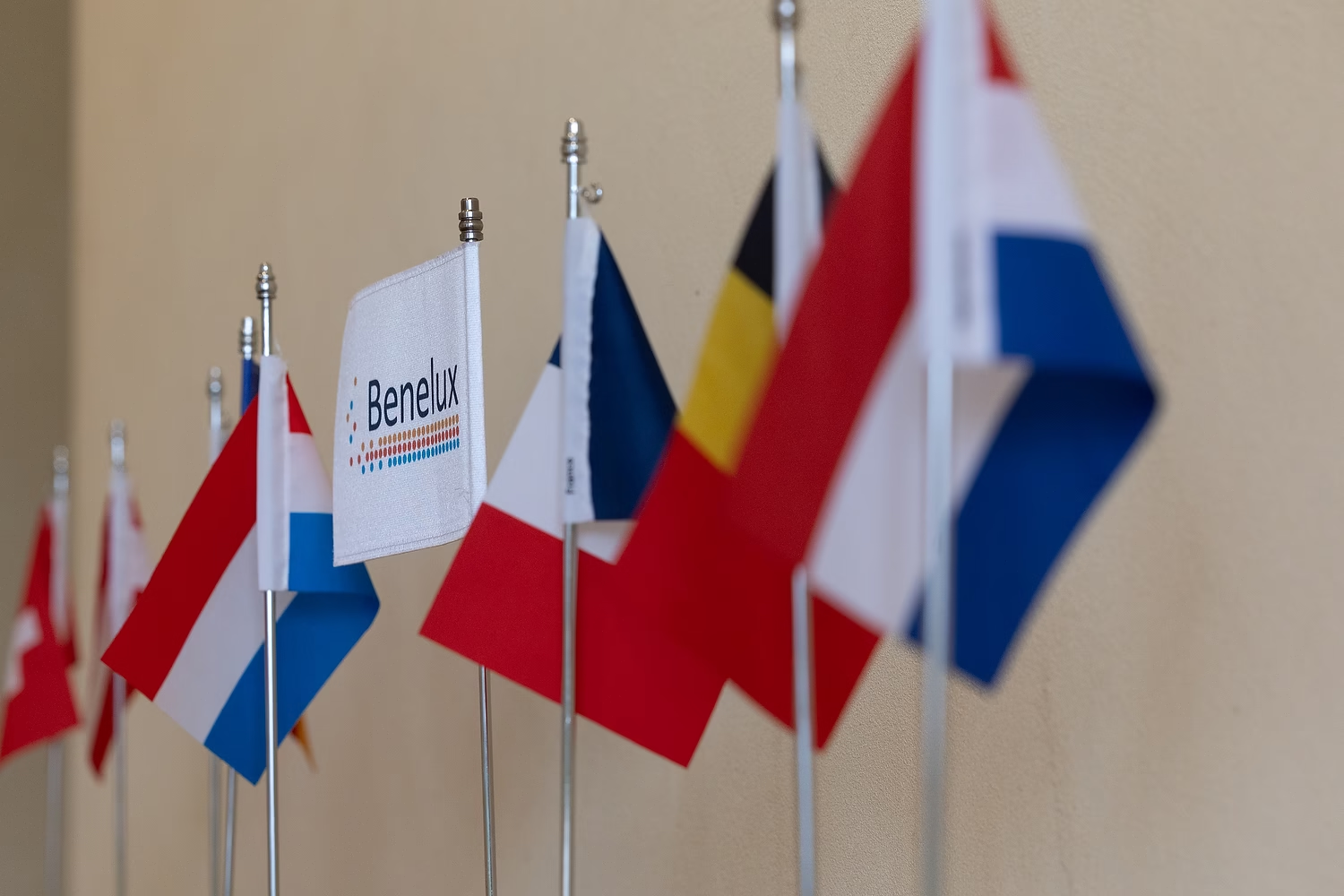
The reality of Russia’s full-scale invasion of Ukraine in 2022, rising defense spending across Europe, and the Benelux countries’ commitment to strengthening EU capabilities (particularly in the context of expanding the defense industrial base and scientific research, as well as cross-border military projects), have made these countries a valuable direction for Poland in the coming years for developing new forms of cooperation and investment, as well as a point of reference and an opportunity to mutually benefit from best practices and experience.
Author: Wiktoria Barteczko
Published: 23/07/2026

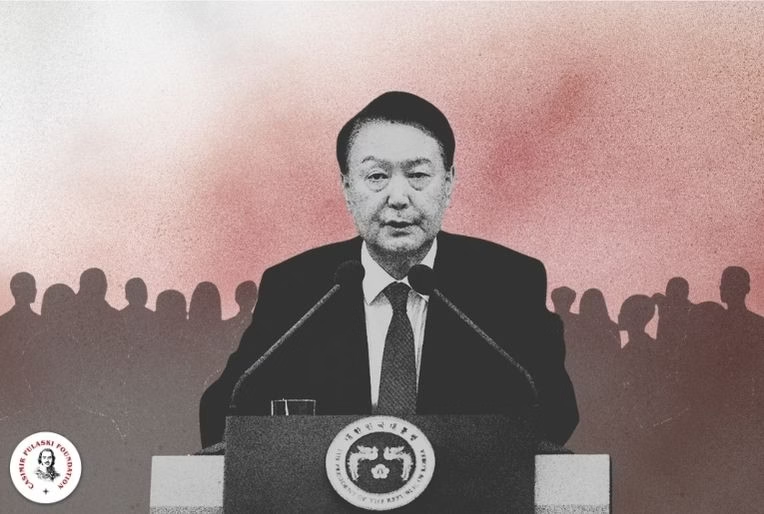
On June 13, Yoon Suk Yeol, the former president of the Republic of Korea (ROK), was sentenced to two years in prison after being found guilty of illegally receiving opinion polling services worth $179,800 for free from a political broker. Just four days earlier, on June 9, ROK Supreme Court upheld his seven-year prison sentence for obstructing authorities attempts to arrest him over his short-lived imposition of martial law in 2024.
Author: Zuzanna Kowzan
Published: 20/07/2026
The summit in Ankara will deliver contracts, memoranda, and letters of intent, yet it will not clarify what Europe lacks most acutely — its own answer to the question of the long-term direction of the transformation being undertaken. At the root of the contemporary identity crisis lies not a deficit of financial resources but the absence of a shared European strategic culture, which Ankara may throw into particularly sharp relief, proving that material rearmament is outpacing the ability to define directions for joint action.
Author: Patryk Litwiński
Published: 06/07/2026

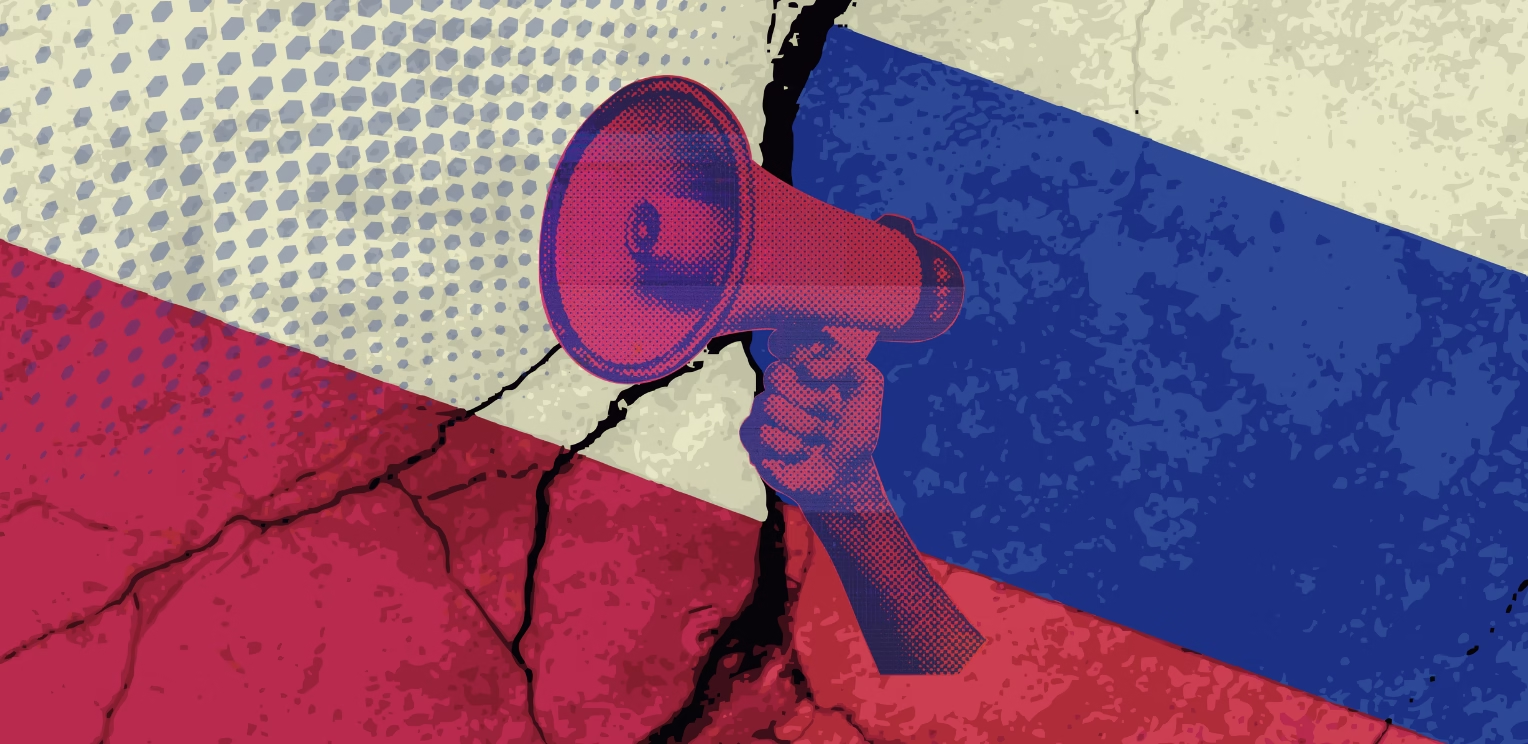
The information space has become one of the key dimensions of contemporary political and geopolitical rivalry. States, political organizations, media, and non-state actors increasingly compete not only for control over territory, resources, or military capabilities, but also for the ability to shape public perception, the interpretation of events, and citizens' trust in public institutions. As a result, information, and subsequently narratives, have become an essential element of state security and resilience of democratic societies.
Author: Maciej F. Bukowski, Agnieszka Grzegorzewska
Published: 30/06/2026

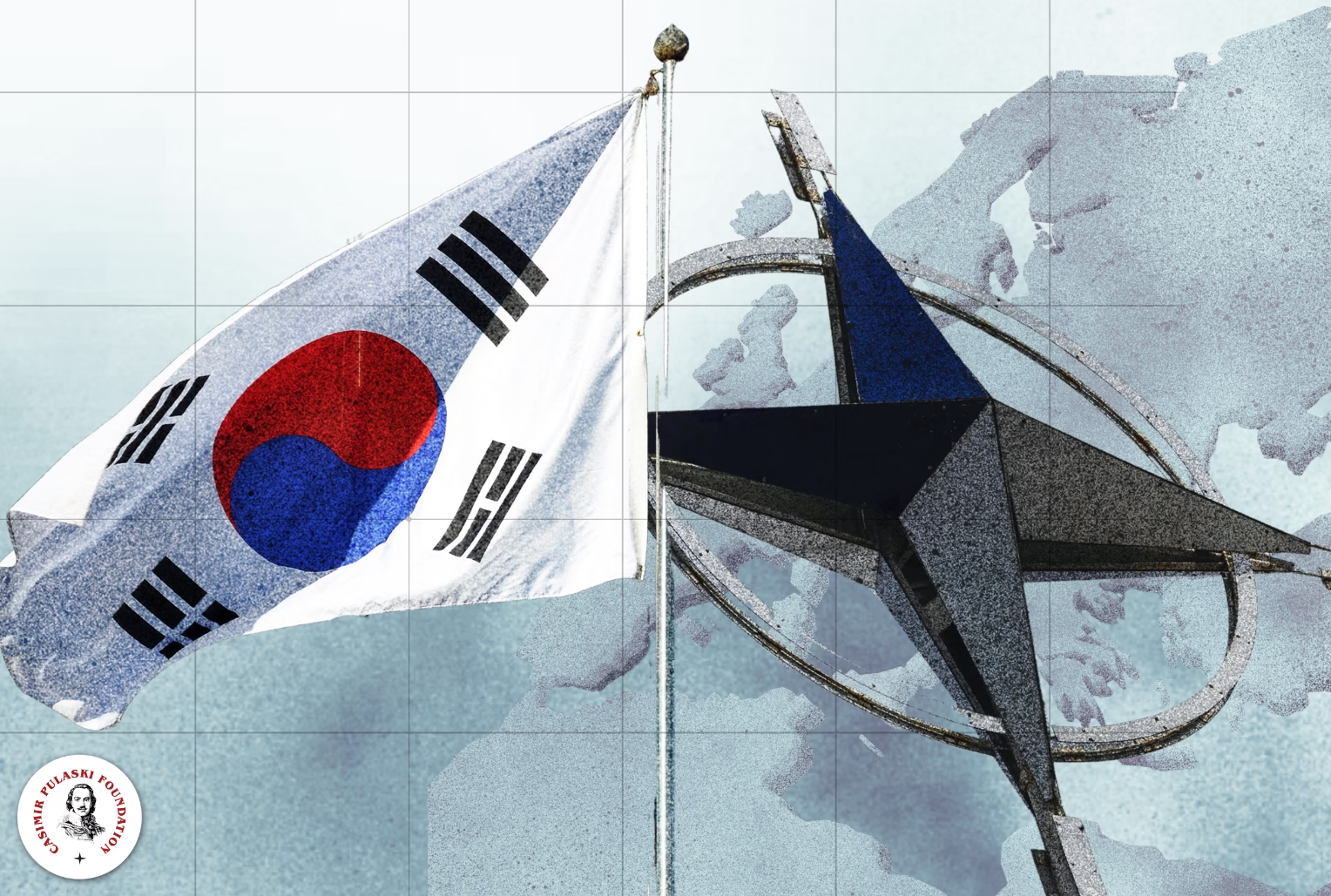
The Republic of Korea (ROK) has become a key European defence partner – and has achieved success in this regard to a level that was perhaps previously not thought possible.
Author: Reuben F. Johnson, Sebastian Czub
Published: 30/06/2026

Around a decade ago at the Singapore Air Show the executive of a major US defence company told me more than once “my best sales agents are the Chinese. Every time they make a public show of steaming their aircraft carrier out for sea trials or commit another one of their violations of some nation’s territorial waters or build up another one of their artificial islands – that’s when my phone starts ringing. Other nations in the region suddenly want to know how soon they could have some US-made military hardware, especially if they are EDA [Excess Defence Articles].”
Author: Reuben F. Johnson
Published: 18/06/2026

In late March 2026, a month after the outbreak of the war with Iran, Volodymyr Zelensky toured Jeddah, Abu Dhabi, Doha and Amman in three days. With Saudi Arabia, the United Arab Emirates, Qatar and Jordan he signed defence cooperation agreements providing for joint investment, joint production and the sharing of experience and solutions in defence against missiles and unmanned aircraft.
Autor: Maciej Dachowski
Opublikowano: 20/08/2026
In recent months we have been witnessing a very significant shift in international relations. What is changing is the way states build their position in the international system. A growing number of middle powers no longer organise their entire strategy around a single centre, nor do they treat relations with competing great powers as mutually exclusive.
Autor: Maciej Dachowski
Opublikowano: 17/08/2026
Few countries have reversed course on energy policy as decisively as Sweden. In the space of just a few years, the country has moved from planning the gradual phase-out of nuclear power to placing it at the centre of its long-term energy strategy.
Autor: Karolina Pawlik, Adam Żyłka
Opublikowano: 10/08/2026
Autor: Reuben F. Johnson
Opublikowano: 29/07/2026
The reality of Russia’s full-scale invasion of Ukraine in 2022, rising defense spending across Europe, and the Benelux countries’ commitment to strengthening EU capabilities (particularly in the context of expanding the defense industrial base and scientific research, as well as cross-border military projects), have made these countries a valuable direction for Poland in the coming years for developing new forms of cooperation and investment, as well as a point of reference and an opportunity to mutually benefit from best practices and experience.
Autor: Wiktoria Barteczko
Opublikowano: 23/07/2026
On June 13, Yoon Suk Yeol, the former president of the Republic of Korea (ROK), was sentenced to two years in prison after being found guilty of illegally receiving opinion polling services worth $179,800 for free from a political broker. Just four days earlier, on June 9, ROK Supreme Court upheld his seven-year prison sentence for obstructing authorities attempts to arrest him over his short-lived imposition of martial law in 2024.
Autor: Zuzanna Kowzan
Opublikowano: 20/07/2026
The summit in Ankara will deliver contracts, memoranda, and letters of intent, yet it will not clarify what Europe lacks most acutely — its own answer to the question of the long-term direction of the transformation being undertaken. At the root of the contemporary identity crisis lies not a deficit of financial resources but the absence of a shared European strategic culture, which Ankara may throw into particularly sharp relief, proving that material rearmament is outpacing the ability to define directions for joint action.
Autor: Patryk Litwiński
Opublikowano: 06/07/2026
The information space has become one of the key dimensions of contemporary political and geopolitical rivalry. States, political organizations, media, and non-state actors increasingly compete not only for control over territory, resources, or military capabilities, but also for the ability to shape public perception, the interpretation of events, and citizens' trust in public institutions. As a result, information, and subsequently narratives, have become an essential element of state security and resilience of democratic societies.
Autor: Maciej F. Bukowski, Agnieszka Grzegorzewska
Opublikowano: 30/06/2026
The Republic of Korea (ROK) has become a key European defence partner – and has achieved success in this regard to a level that was perhaps previously not thought possible.
Autor: Reuben F. Johnson, Sebastian Czub
Opublikowano: 30/06/2026
Around a decade ago at the Singapore Air Show the executive of a major US defence company told me more than once “my best sales agents are the Chinese. Every time they make a public show of steaming their aircraft carrier out for sea trials or commit another one of their violations of some nation’s territorial waters or build up another one of their artificial islands – that’s when my phone starts ringing. Other nations in the region suddenly want to know how soon they could have some US-made military hardware, especially if they are EDA [Excess Defence Articles].”
Autor: Reuben F. Johnson
Opublikowano: 18/06/2026