

During this year’s Warsaw Security Forum, taking place in Warsaw on 12–13 October, experts will discuss the evolving relationship between North Korea, China and Russia during the roundtable “The North Korea–China–Russia Axis: Myth or Reality?”
Published: 10/10/2026


On 22nd September, in her speech at the United Nations General Assembly (UN GA) the Japanese Prime Minister Sanae Takaichi - as the first Japanese leader since 2005 - urged the removal of the ‘enemy state’ clause from the UN Charter. The provision was included in the UN's founding document to denote nations that fought against the Charter’s original signatories during World War II, specifically targeting Axis powers such as Germany, Italy and Japan. Although over eight decades have passed since the end of the conflict and the ‘enemy states’ are well-functioning democracies, the clause remains in its original form. Moreover, in 1995 the UN GA adopted a resolution stipulating it had ‘become obsolete’ and called for its erasure from the Charter.
Author: Jakub Witczak
Published: 07/10/2026


According to Finnish media reports, the United Kingdom has proposed extending a nuclear umbrella over the members of the Joint Expeditionary Force (JEF). Apart from France and the United States, the UK is the only NATO member possessing its own nuclear capability. The initiative arose in response to declining faith in the nuclear umbrella provided by the United States. Poland's participation in the format would make sense if it were covered by the initiative's nuclear deterrence.
Author: Jan Starosta
Published: 07/10/2026
On 16 September, in her State of the Union address, European Commission President Ursula von der Leyen said that she wanted to work on opening the way for Canada to become the first “associate member” of the European Union. Such a status is not provided for in the treaties, its content has yet to be worked out, and, according to media reports, the member states had not been informed of the idea beforehand.
Author: Ewa Polak
Published: 06/10/2026

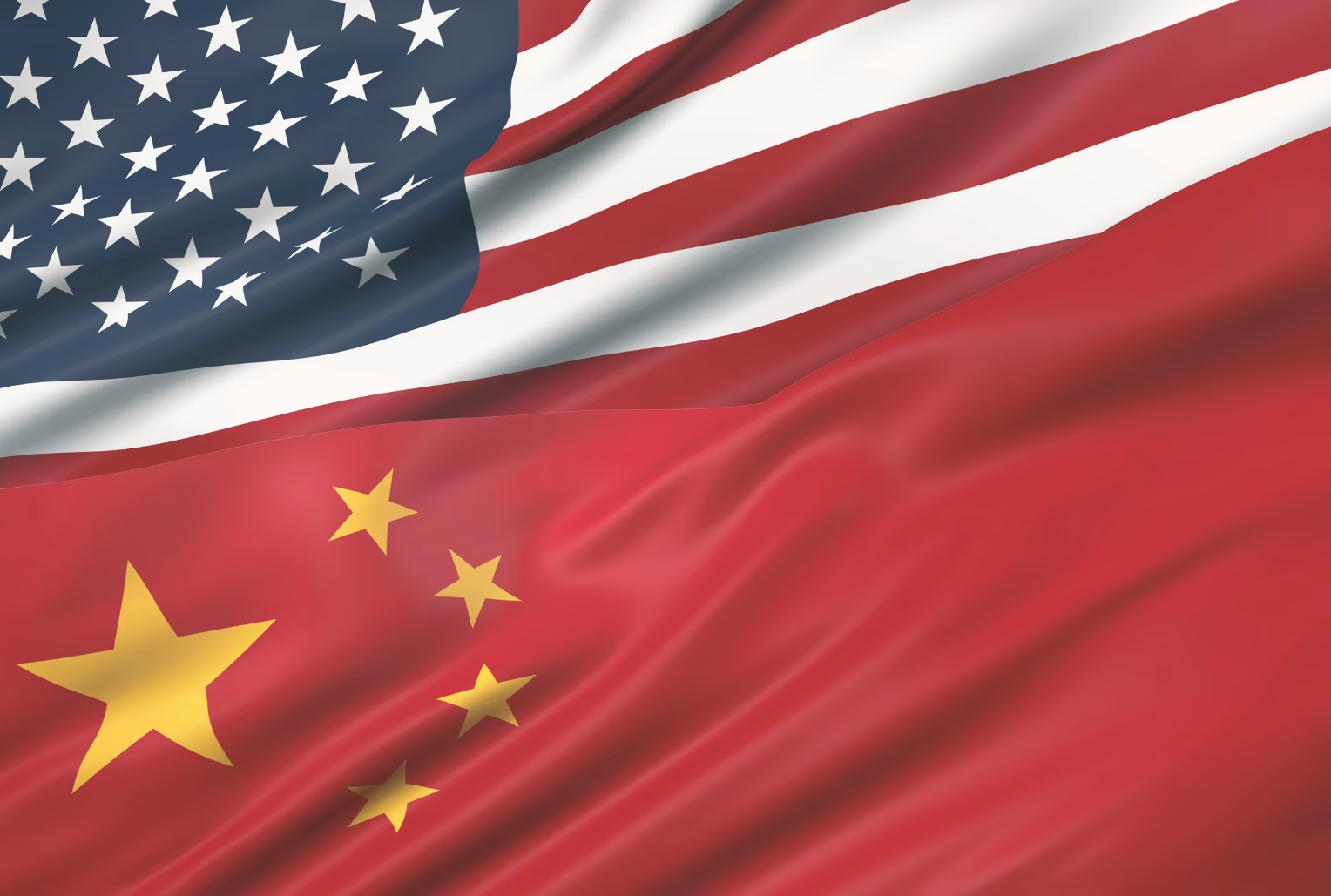
The three-day Donald Trump–Xi Jinping summit, held on 23–25 September 2026, has been widely described as rich in ceremony but poor in substance. The leaders of the United States and the People’s Republic of China (PRC) failed to achieve a breakthrough on any of the major international disputes currently at stake, nor did they announce any significant new initiatives.
Author: Krzysztof Kozłowski
Published: 30/09/2026
On March 12, the People’s Republic of China (PRC) legislature adopted the Law on Promoting Ethnic Unity and Progress (民族团结进步促进法). The adoption of the law took place during the annual Lianghui, or (两会), meaning the “two sessions,” or the annual plenary meetings of China’s top legislative and political advisory bodies. These are the National People’s Congress and the Chinese People’s Political Consultative Conference.
Author: Reuben F. Johnson
Published: 28/09/2026

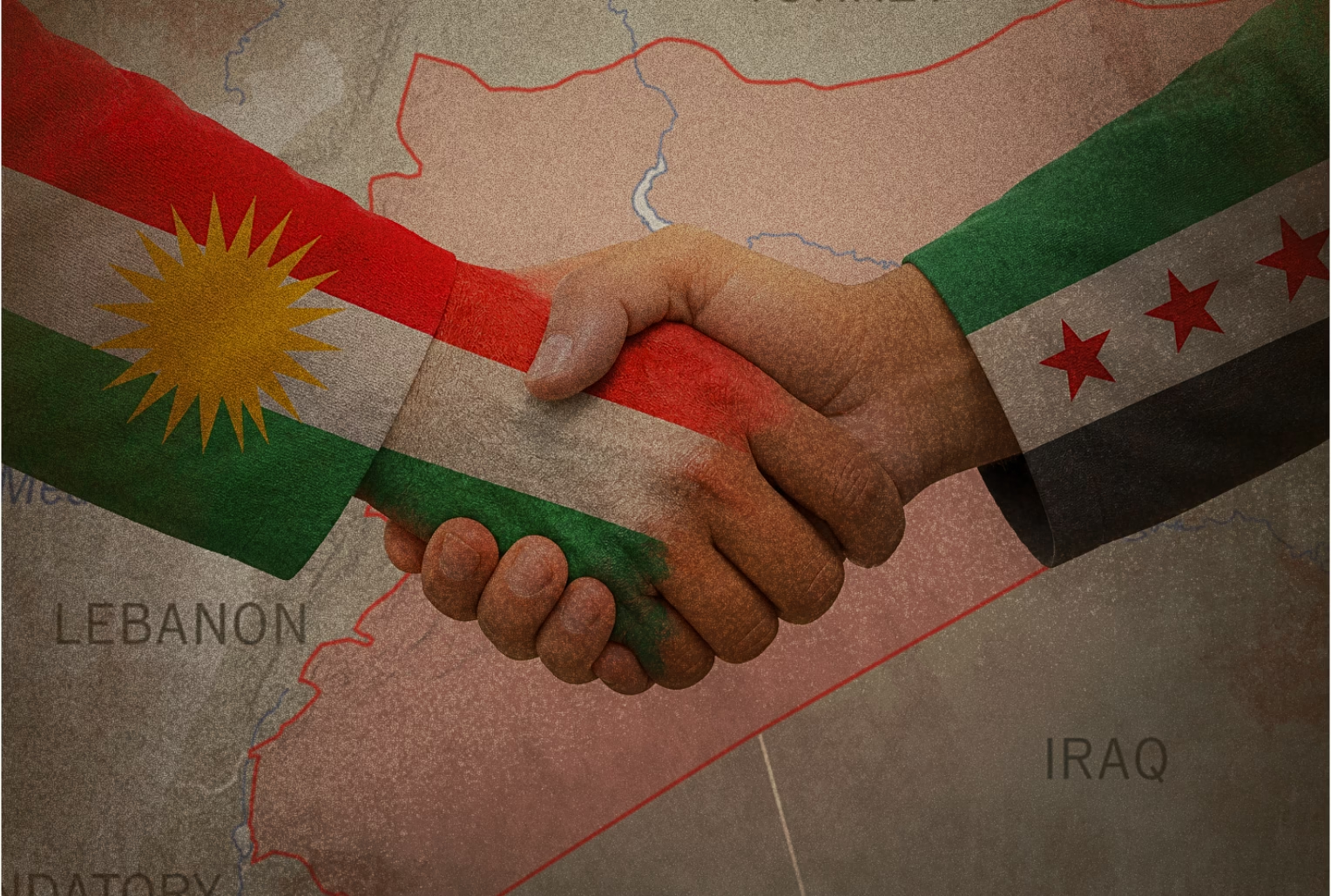
The agreement concluded between the Kurds and the government of Ahmed al-Sharaa is very good news, creating an opportunity for Syria’s stabilization. Its key element is Mazlum Abdi’s announced dissolution of the Syrian Democratic Forces (SDF) as a separate formation and the integration of their structures into the Syrian government forces in an organized manner, through the creation of five new brigades based on the SDF. The agreement is also in Europe’s interest, as its effective implementation would reduce the risk of migration pressure and an elevated terrorist threat.
Author: Witold Repetowicz
Published: 25/09/2026

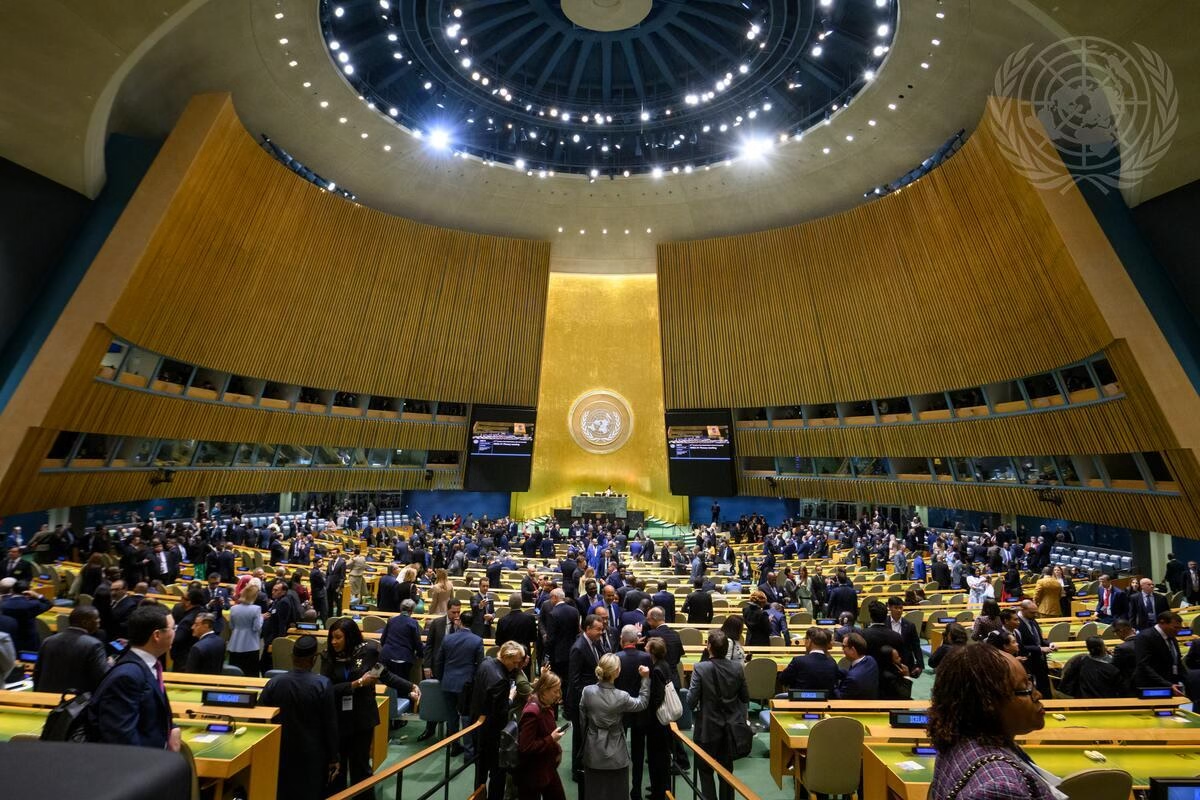
The address of Palestinian President Mahmoud Abbas was played from a recording, because his delegation had been denied US visas. Abbas spoke of a genocidal war in Gaza, warned that the very existence of the Palestinian people is now under threat, and appealed to Donald Trump to honour his commitment to prevent the annexation of Palestinian land.
Author: Maciej Dachowski
Published: 25/09/2026
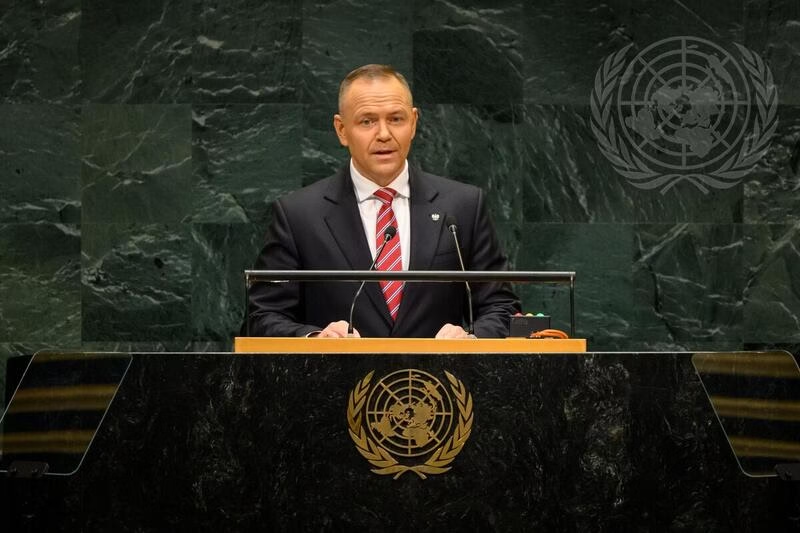
The first day of the debate produced a shared diagnosis of a collapsing order. The second produced a dispute over whether the UN is worth repairing at all. Rwandan Prime Minister Justin Nsengiyumva said that the Organization is better at responding to crises than at preventing them, and that institutions earn legitimacy through results rather than promises.
Author: Maciej Dachowski
Published: 24/09/2026
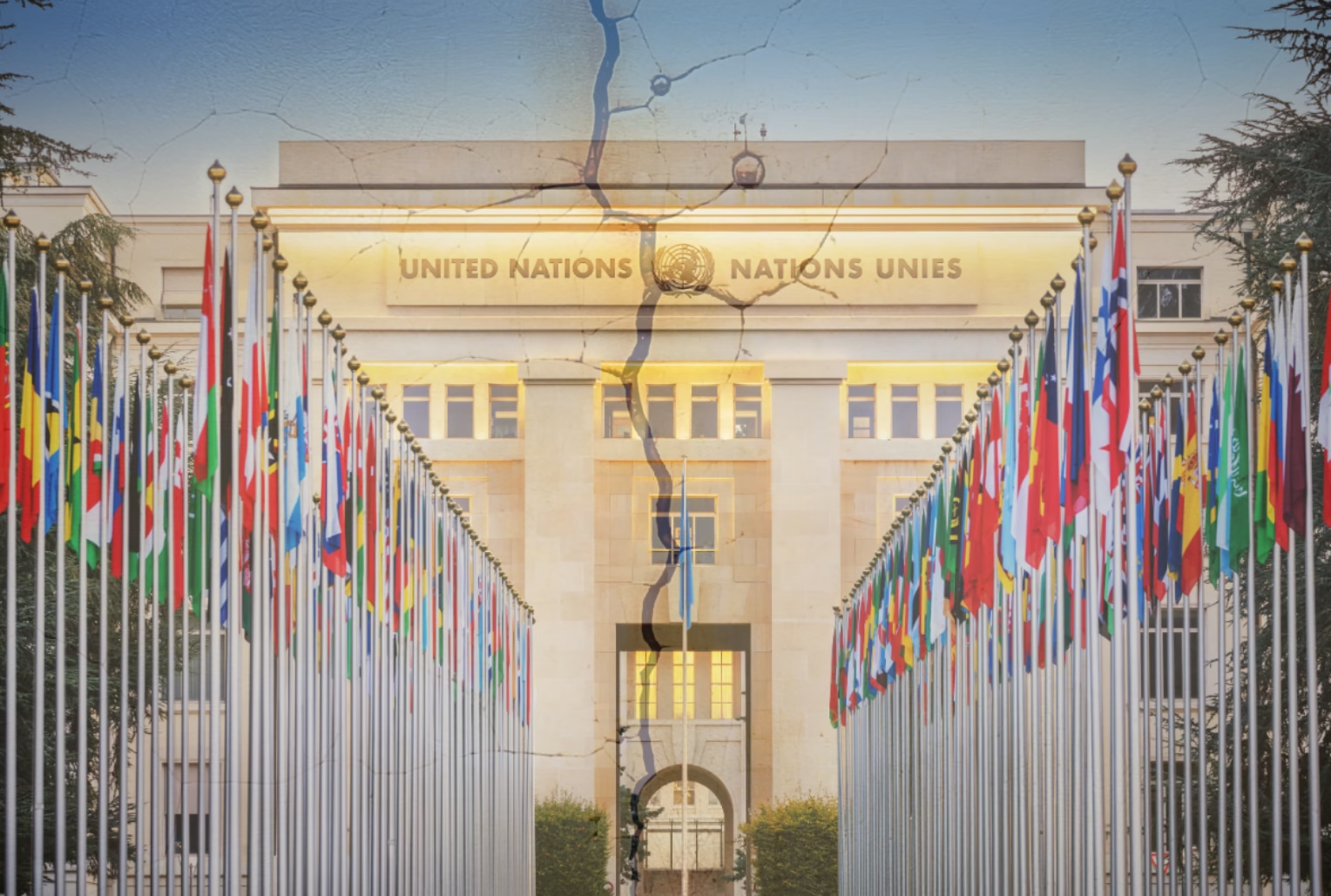
The speeches on the first day of the general debate of the UN General Assembly produced a fairly coherent diagnosis, but no shared remedy. UN Secretary-General António Guterres spoke of four challenges linked to the exercise of power, namely war, inequality, climate change and artificial intelligence.
Author: Maciej Dachowski
Published: 23/09/2026
During this year’s Warsaw Security Forum, taking place in Warsaw on 12–13 October, experts will discuss the evolving relationship between North Korea, China and Russia during the roundtable “The North Korea–China–Russia Axis: Myth or Reality?”
Opublikowano: 10/10/2026
On 22nd September, in her speech at the United Nations General Assembly (UN GA) the Japanese Prime Minister Sanae Takaichi - as the first Japanese leader since 2005 - urged the removal of the ‘enemy state’ clause from the UN Charter. The provision was included in the UN's founding document to denote nations that fought against the Charter’s original signatories during World War II, specifically targeting Axis powers such as Germany, Italy and Japan. Although over eight decades have passed since the end of the conflict and the ‘enemy states’ are well-functioning democracies, the clause remains in its original form. Moreover, in 1995 the UN GA adopted a resolution stipulating it had ‘become obsolete’ and called for its erasure from the Charter.
Autor: Jakub Witczak
Opublikowano: 07/10/2026
According to Finnish media reports, the United Kingdom has proposed extending a nuclear umbrella over the members of the Joint Expeditionary Force (JEF). Apart from France and the United States, the UK is the only NATO member possessing its own nuclear capability. The initiative arose in response to declining faith in the nuclear umbrella provided by the United States. Poland's participation in the format would make sense if it were covered by the initiative's nuclear deterrence.
Autor: Jan Starosta
Opublikowano: 07/10/2026
On 16 September, in her State of the Union address, European Commission President Ursula von der Leyen said that she wanted to work on opening the way for Canada to become the first “associate member” of the European Union. Such a status is not provided for in the treaties, its content has yet to be worked out, and, according to media reports, the member states had not been informed of the idea beforehand.
Autor: Ewa Polak
Opublikowano: 06/10/2026
The three-day Donald Trump–Xi Jinping summit, held on 23–25 September 2026, has been widely described as rich in ceremony but poor in substance. The leaders of the United States and the People’s Republic of China (PRC) failed to achieve a breakthrough on any of the major international disputes currently at stake, nor did they announce any significant new initiatives.
Autor: Krzysztof Kozłowski
Opublikowano: 30/09/2026
On March 12, the People’s Republic of China (PRC) legislature adopted the Law on Promoting Ethnic Unity and Progress (民族团结进步促进法). The adoption of the law took place during the annual Lianghui, or (两会), meaning the “two sessions,” or the annual plenary meetings of China’s top legislative and political advisory bodies. These are the National People’s Congress and the Chinese People’s Political Consultative Conference.
Autor: Reuben F. Johnson
Opublikowano: 28/09/2026
The agreement concluded between the Kurds and the government of Ahmed al-Sharaa is very good news, creating an opportunity for Syria’s stabilization. Its key element is Mazlum Abdi’s announced dissolution of the Syrian Democratic Forces (SDF) as a separate formation and the integration of their structures into the Syrian government forces in an organized manner, through the creation of five new brigades based on the SDF. The agreement is also in Europe’s interest, as its effective implementation would reduce the risk of migration pressure and an elevated terrorist threat.
Autor: Witold Repetowicz
Opublikowano: 25/09/2026
The address of Palestinian President Mahmoud Abbas was played from a recording, because his delegation had been denied US visas. Abbas spoke of a genocidal war in Gaza, warned that the very existence of the Palestinian people is now under threat, and appealed to Donald Trump to honour his commitment to prevent the annexation of Palestinian land.
Autor: Maciej Dachowski
Opublikowano: 25/09/2026
The first day of the debate produced a shared diagnosis of a collapsing order. The second produced a dispute over whether the UN is worth repairing at all. Rwandan Prime Minister Justin Nsengiyumva said that the Organization is better at responding to crises than at preventing them, and that institutions earn legitimacy through results rather than promises.
Autor: Maciej Dachowski
Opublikowano: 24/09/2026
The speeches on the first day of the general debate of the UN General Assembly produced a fairly coherent diagnosis, but no shared remedy. UN Secretary-General António Guterres spoke of four challenges linked to the exercise of power, namely war, inequality, climate change and artificial intelligence.
Autor: Maciej Dachowski
Opublikowano: 23/09/2026