

The Casimir Pulaski Foundation published the following report: “Polish Defence
Published: 04/03/2015
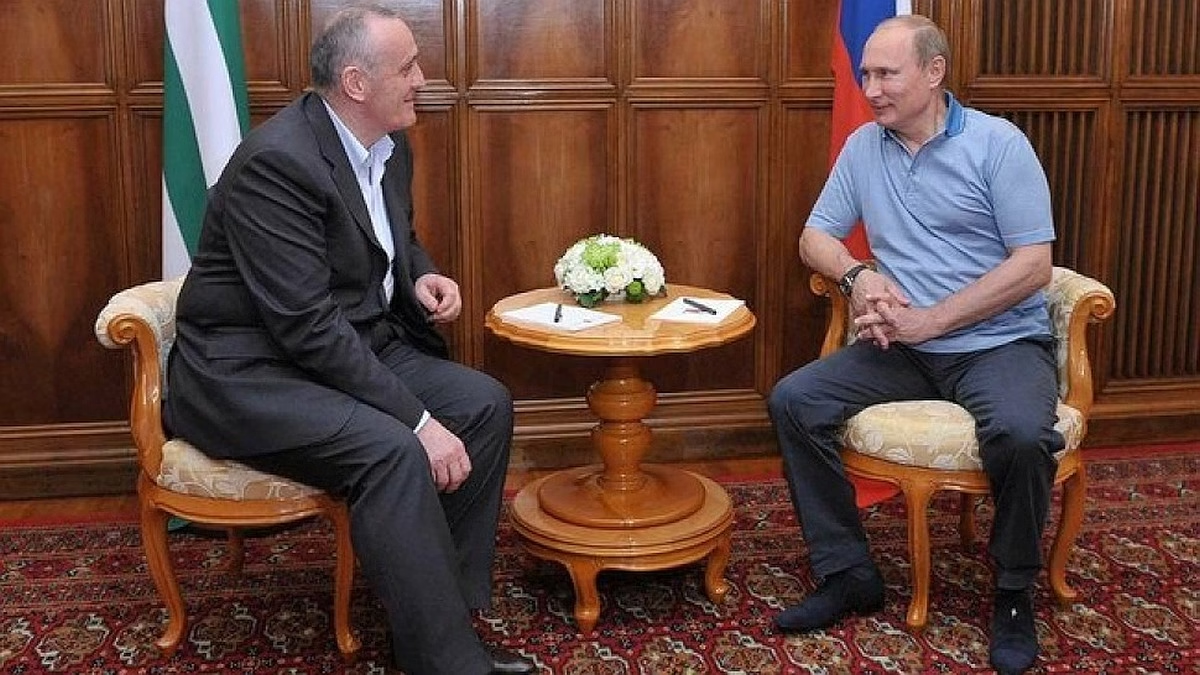
Traumatized by ongoing fights in Ukraine the Western community continues to challenge Russia diplomatically and with ongoing sanctions.
Author: Jan Nalaskowski
Published: 27/02/2015

The Islamist terrorist attack that took place in Copenhagen on February 14, 2015 is the latest incident of this kind in a Western European country in recent months.
Author: Tomasz Otłowski
Published: 19/02/2015


On 26 December 2014 Russian President Vladimir Putin approved the revised “Military Doctrine of the Russian Federation.” Compared to the 2010 version, this document expanded the catalog of external threats.
Author: Tomasz Smura, Rafał Lipka
Published: 31/01/2015


The analysis of the economic and legal factors conducted in the report proved the current defence procurement system in Poland does not ensure involvement of the Polish industry in implementation of the Armed Forces Modernization Plan.
Author: Maciej Olex-Szczytowski, Małgorzata Darowska
Published: 23/01/2015


In response to the energy crisis of 2009, the creation of an energy union has been promoted within the EU with varying degrees of commitment.
Author: Justyna Trubalska
Published: 20/01/2015

The date of 31 December 2014 will not go down in Afghanistan’s history as a solely positive one. It could have been otherwise had the strategic and political conditions been different.
Author: Tomasz Otłowski
Published: 30/12/2014

Poland’s security environment is in a state of constant flux. As well as the new threats and challenges, such as terrorism, migration and cross-border crime, traditional threats are still very much present.
Author: Rafał Ciastoń, Paweł Fleischer, Rafał Lipka, Kamil Mazurek, Grzegorz Rdzanek, Tomasz Smura
Published: 04/12/2014

During the ceremony, the President of the Board of the
Published: 26/11/2014

The NATO Summit in Newport, which took place on September 4-5, 2014, brought important decisions for Poland’s national security. The Alliance will strengthen its military presence on its eastern flank
Author: Przemysław Pacuła
Published: 31/10/2014
The Casimir Pulaski Foundation published the following report: “Polish Defence
Opublikowano: 04/03/2015
Traumatized by ongoing fights in Ukraine the Western community continues to challenge Russia diplomatically and with ongoing sanctions.
Autor: Jan Nalaskowski
Opublikowano: 27/02/2015
The Islamist terrorist attack that took place in Copenhagen on February 14, 2015 is the latest incident of this kind in a Western European country in recent months.
Autor: Tomasz Otłowski
Opublikowano: 19/02/2015
On 26 December 2014 Russian President Vladimir Putin approved the revised “Military Doctrine of the Russian Federation.” Compared to the 2010 version, this document expanded the catalog of external threats.
Autor: Tomasz Smura, Rafał Lipka
Opublikowano: 31/01/2015
The analysis of the economic and legal factors conducted in the report proved the current defence procurement system in Poland does not ensure involvement of the Polish industry in implementation of the Armed Forces Modernization Plan.
Autor: Maciej Olex-Szczytowski, Małgorzata Darowska
Opublikowano: 23/01/2015
In response to the energy crisis of 2009, the creation of an energy union has been promoted within the EU with varying degrees of commitment.
Autor: Justyna Trubalska
Opublikowano: 20/01/2015
The date of 31 December 2014 will not go down in Afghanistan’s history as a solely positive one. It could have been otherwise had the strategic and political conditions been different.
Autor: Tomasz Otłowski
Opublikowano: 30/12/2014
Poland’s security environment is in a state of constant flux. As well as the new threats and challenges, such as terrorism, migration and cross-border crime, traditional threats are still very much present.
Autor: Rafał Ciastoń, Paweł Fleischer, Rafał Lipka, Kamil Mazurek, Grzegorz Rdzanek, Tomasz Smura
Opublikowano: 04/12/2014
During the ceremony, the President of the Board of the
Opublikowano: 26/11/2014
The NATO Summit in Newport, which took place on September 4-5, 2014, brought important decisions for Poland’s national security. The Alliance will strengthen its military presence on its eastern flank
Autor: Przemysław Pacuła
Opublikowano: 31/10/2014