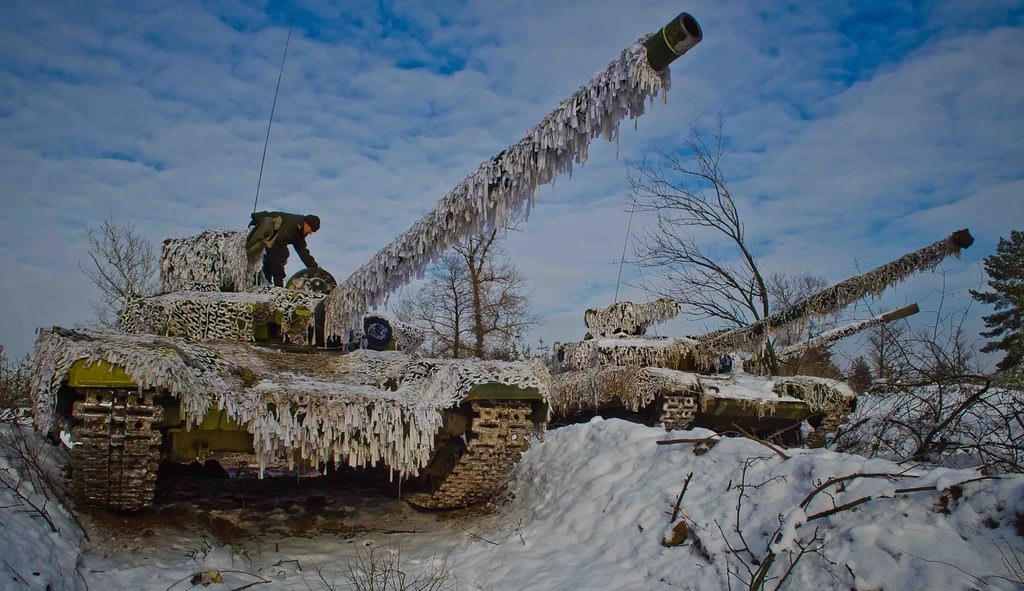
The onset of winter is beginning to strain both sides of the war in Ukraine, bringing to the battlefield not only the dangers of conventional arms but also those of sickness, supply shortages and the cold itself.
As the Netherlands goes to the polls on November 22 for a snap parliamentary election, a new era will begin in Dutch politics. After 13 years as Prime Minister, Mark Rutte, the second longest ruling EU leader, has resigned.
With the war in Ukraine beginning to enter its second winter, both sides of the conflict maintain their offensive operations, despite heavy resistance and adverse environmental conditions.
In Ukraine both sides of the conflict continue to be stuck in a brutal attritional struggle, locked in positional trench warfare reminiscent of World War I. The major attempts to break this stalemate conducted by either side have so far brought no change.
At Warsaw Security Forum 2023, the roundtable discussion entitled “Enhancing Cyber Resilience in CEE for the Benefit of NATO” culminated with two key recommendations for bolstering cyber resilience in Central and Eastern Europe (CEE), with implications for NATO's strategic interests.
Rezolucja nr 1325 Rady Bezpieczeństwa Organizacji Narodów Zjednoczonych, przyjęta jednogłośnie 31 października 2000 roku zrewolucjonizowała działania na rzecz pokoju i bezpieczeństwa
The Polish elections have been widely followed in Europe, as Poland’s strategic meaning has increased against the background of the Russian invasion of Ukraine
Bratislava will no longer be in vanguard of the Western support for Ukraine and will join Budapest in trying to leverage further support of the EU with peace talks.
With the war in Ukraine once again turning into a contest of attrition, Russia possesses a significant advantage. It is at this time that Ukraine has to marshal and husband its resources and look to the West for support in the hopes of being able to match Russia’s seemingly inexhaustible military-industrial capacity.
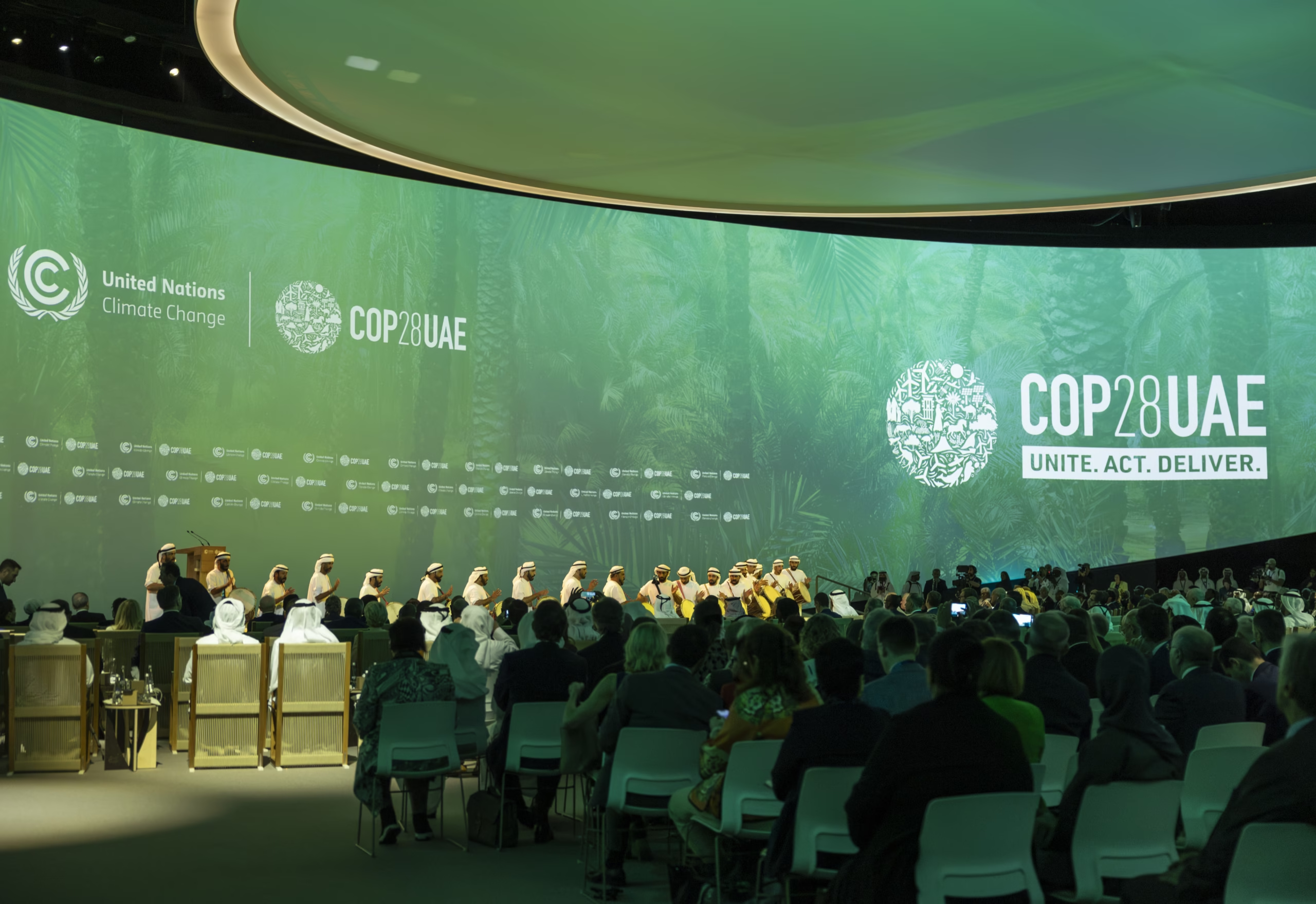
Although geopolitical tensions make new agreements harder to reach, accelerating global warming will require parties to continue regular meetings and at least have minimal consultancy on climate issues.
Yesterday, Casimir Pulaski Foundation together with the British Embassy in Warsaw has organised ‘the Warsaw Justice for Ukraine Conference’ where we discuss how to support accountability for war crimes perpetrated in Ukraine.
At the end of the day, there is much that the international community should and can do to help. Strong political, geopolitical, economic, and moral reasons exist for offering it. But it is equally true that Armenia must first help itself.
The onset of winter is beginning to strain both sides of the war in Ukraine, bringing to the battlefield not only the dangers of conventional arms but also those of sickness, supply shortages and the cold itself.
As the Netherlands goes to the polls on November 22 for a snap parliamentary election, a new era will begin in Dutch politics. After 13 years as Prime Minister, Mark Rutte, the second longest ruling EU leader, has resigned.
With the war in Ukraine beginning to enter its second winter, both sides of the conflict maintain their offensive operations, despite heavy resistance and adverse environmental conditions.
In Ukraine both sides of the conflict continue to be stuck in a brutal attritional struggle, locked in positional trench warfare reminiscent of World War I. The major attempts to break this stalemate conducted by either side have so far brought no change.