

The battle for Bakhmut seems to be entering its final stages. Over the last week the Russian forces launched a large coordinated offensive along the entire line of contact in the region.
Autor: Sebastian Czub
Opublikowano: 03/03/2023


Ogłoszone 27 lutego br. „Ramy windsorskie” mają w zamierzeniu rządu Zjednoczonego Królestwa oraz Unii Europejskiej stanowić remedium na niedoskonałości Protokołu północnoirlandzkiego.
Autor: Bartłomiej Kot
Opublikowano: 02/03/2023


All societies, countries, organisations, and private individuals functioning in public information space are confronted with the challenge of disinformation.
Autor: Robert Pszczel
Opublikowano: 02/03/2023


The Russian invasion of Ukraine has brought an unprecedented chance to end the existence of harmful stereotype of Central and Eastern Europe as a region where the Kremlin has special interests.
Autor: Miłosz J. Cordes
Opublikowano: 28/02/2023


Poland's military procurements, resulting from the growing threat from Russia, are unprecedented in their scale. They provide not only opportunities – Poland can significantly boost its combat capabilities and thus its position within NATO – but also generate serious challenges which cannot be underestimated. Many questions remain unanswered.
Autor: Robert Czulda
Opublikowano: 27/02/2023


In most important frontline news from this week, Ukrainian forces carried out a missile attack against several key Russian targets, including far behind the frontlines such as occupied Mariupol.
Autor: SEBASTIAN CZUB
Opublikowano: 24/02/2023

The start of the Russian aggression on 24th February 2022 has radically redrawn the contours of international security. As Europeans, we are not only defending our territories, we are also protecting democratic values and human rights.
Opublikowano: 24/02/2023


In a recent development a number of senior UK defence industry officials arrived in Kyiv to discuss plans for a joint venture between the two countries.
Autor: Sebastian Czub
Opublikowano: 22/02/2023

Putin’s speech has been an excruciatingly long ordeal, and one that started with aggressive yet somewhat reused statements. The first key point brought forward was a reaffirmation of Russian commitment to the “Special Military Operation” in Ukraine.
Autor: Sebastian Czub
Opublikowano: 22/02/2023


The legal and organisational nature of the “Special Military Operation” has always been rather unclear. Neither an outright war nor a counter terrorist operation so common in Russia, it didn’t fit into the pre-existing legal statutes of the Russian Federation.
Autor: Sebastian Czub
Opublikowano: 21/02/2023

One year into Russia’s full-scale invasion of Ukraine, the West is in need for a diversified strategy when discussing the conflict with its partners. Due to historical experiences, non-European and non-Western countries look at the Russian aggression differently. Supporting Ukraine thus means learning how communicate the consequences of the ongoing invasion in a language that would take into account addressees’ sensitivity. Such language is essential to assist Kyiv in winning the war and embarking on a path of successful and quick recovery.
Autor: Miłosz J. Cordes
Opublikowano: 15/03/2023
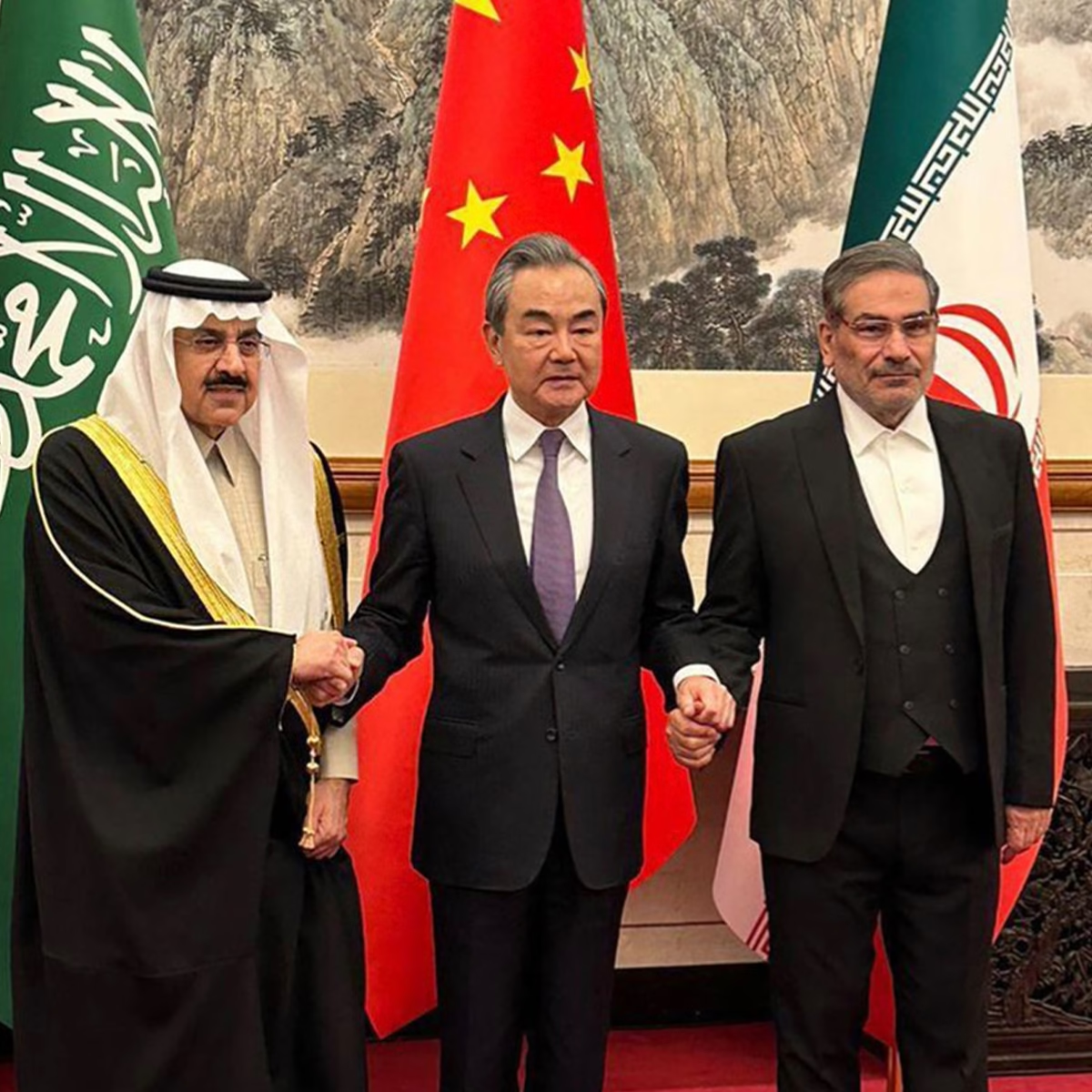
A surprising decision to re-establish diplomatic ties between two arch-rivals - the Islamic Republic of Iran and the Kingdom of Saudi Arabia - could potentially alter a security landscape in the Middle East. However, significant challenges remain, and they will ultimately determine a fate of the agreement. Their deep and structural nature makes it difficult to be optimistic.
Autor: Robert Czulda
Opublikowano: 14/03/2023
In Bakhmut Russian forces continue to press Ukrainian lines and the situation remains very difficult, despite that Ukrainian command has officially declared that the defence of the city will continue.[i] Several western experts have doubted the importance of Bakhmut, stating that the city has little to no strategic value, while at the same time draining Ukrainian forces.
Autor: SEBASTIAN CZUB
Opublikowano: 10/03/2023

Ukraine is pressing its international partners to begin delivering multirole aircraft. Although such discussions have been ongoing for some time and some MiG-29s were reportedly handed over by Poland, this plan – at least when it comes to Western aircraft – remains unlikely. There is a lack of political will, and concerns related to such move cannot be ignored. Nonetheless, NATO and EU member states still have several options to support Ukraine’s aviation.
Autor: Robert Czulda
Opublikowano: 10/03/2023

I was very excited about the invitation from the Polish Embassy in Tbilisi to attend a special conference in Georgia to mark the tragic anniversary of the new, full-size invasion of Ukraine by Russia. The gathering on 24 February, hosted by the respected Rondeli Foundation (the Georgian Foundation for Strategic and International Studies) and supported by the Ukrainian Embassy, turned out to be well-attended event, bringing together diplomats, experts and media. Even Georgian President, Salome Zourabichvili, made a brief appearance. Debates reflected strong unity of views on the international consequences of the war and confrontation started by the Putin regime.
Autor: Robert Pszczel
Opublikowano: 10/03/2023

The 2023 Estonian Parliamentary Elections have come to an end. Victory was claimed by the Reform Party, under the leadership of current Prime Minister Kaja Kallas.
Autor: Sebastian Czub
Opublikowano: 07/03/2023
The battle for Bakhmut seems to be entering its final stages. Over the last week the Russian forces launched a large coordinated offensive along the entire line of contact in the region.
Autor: Sebastian Czub
Opublikowano: 03/03/2023
Ogłoszone 27 lutego br. „Ramy windsorskie” mają w zamierzeniu rządu Zjednoczonego Królestwa oraz Unii Europejskiej stanowić remedium na niedoskonałości Protokołu północnoirlandzkiego.
Autor: Bartłomiej Kot
Opublikowano: 02/03/2023
All societies, countries, organisations, and private individuals functioning in public information space are confronted with the challenge of disinformation.
Autor: Robert Pszczel
Opublikowano: 02/03/2023
The Russian invasion of Ukraine has brought an unprecedented chance to end the existence of harmful stereotype of Central and Eastern Europe as a region where the Kremlin has special interests.
Autor: Miłosz J. Cordes
Opublikowano: 28/02/2023