On 22nd September, in her speech at the United Nations General Assembly (UN GA) the Japanese Prime Minister Sanae Takaichi - as the first Japanese leader since 2005 - urged the removal of the ‘enemy state’ clause from the UN Charter. The provision was included in the UN's founding document to denote nations that fought against the Charter’s original signatories during World War II, specifically targeting Axis powers such as Germany, Italy and Japan. Although over eight decades have passed since the end of the conflict and the ‘enemy states’ are well-functioning democracies, the clause remains in its original form. Moreover, in 1995 the UN GA adopted a resolution stipulating it had ‘become obsolete’ and called for its erasure from the Charter.
Autor: Jakub Witczak
Opublikowano: 07/10/2026

According to Finnish media reports, the United Kingdom has proposed extending a nuclear umbrella over the members of the Joint Expeditionary Force (JEF). Apart from France and the United States, the UK is the only NATO member possessing its own nuclear capability. The initiative arose in response to declining faith in the nuclear umbrella provided by the United States. Poland's participation in the format would make sense if it were covered by the initiative's nuclear deterrence.
Autor: Jan Starosta
Opublikowano: 07/10/2026
On 16 September, in her State of the Union address, European Commission President Ursula von der Leyen said that she wanted to work on opening the way for Canada to become the first “associate member” of the European Union. Such a status is not provided for in the treaties, its content has yet to be worked out, and, according to media reports, the member states had not been informed of the idea beforehand.
Autor: Ewa Polak
Opublikowano: 06/10/2026

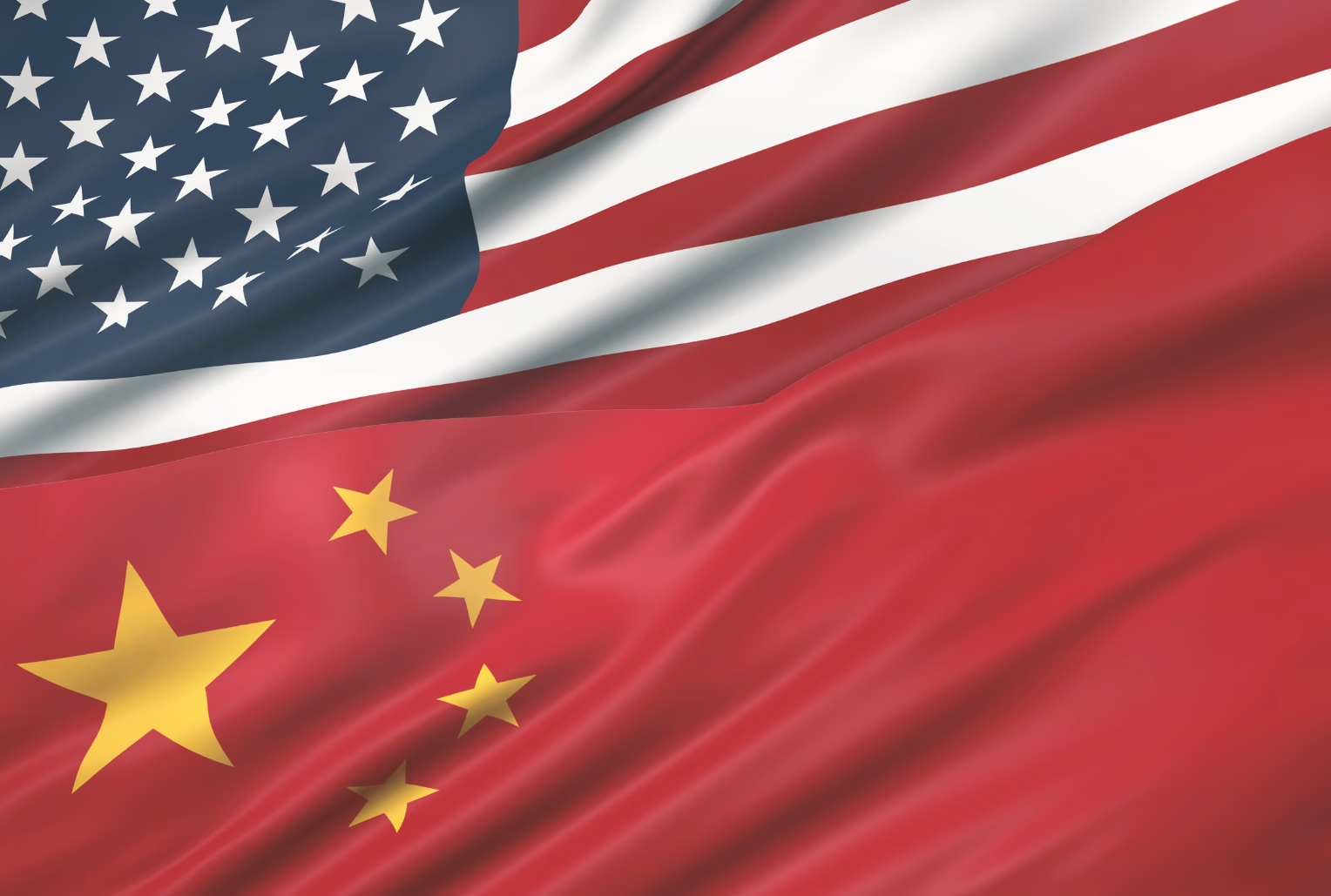
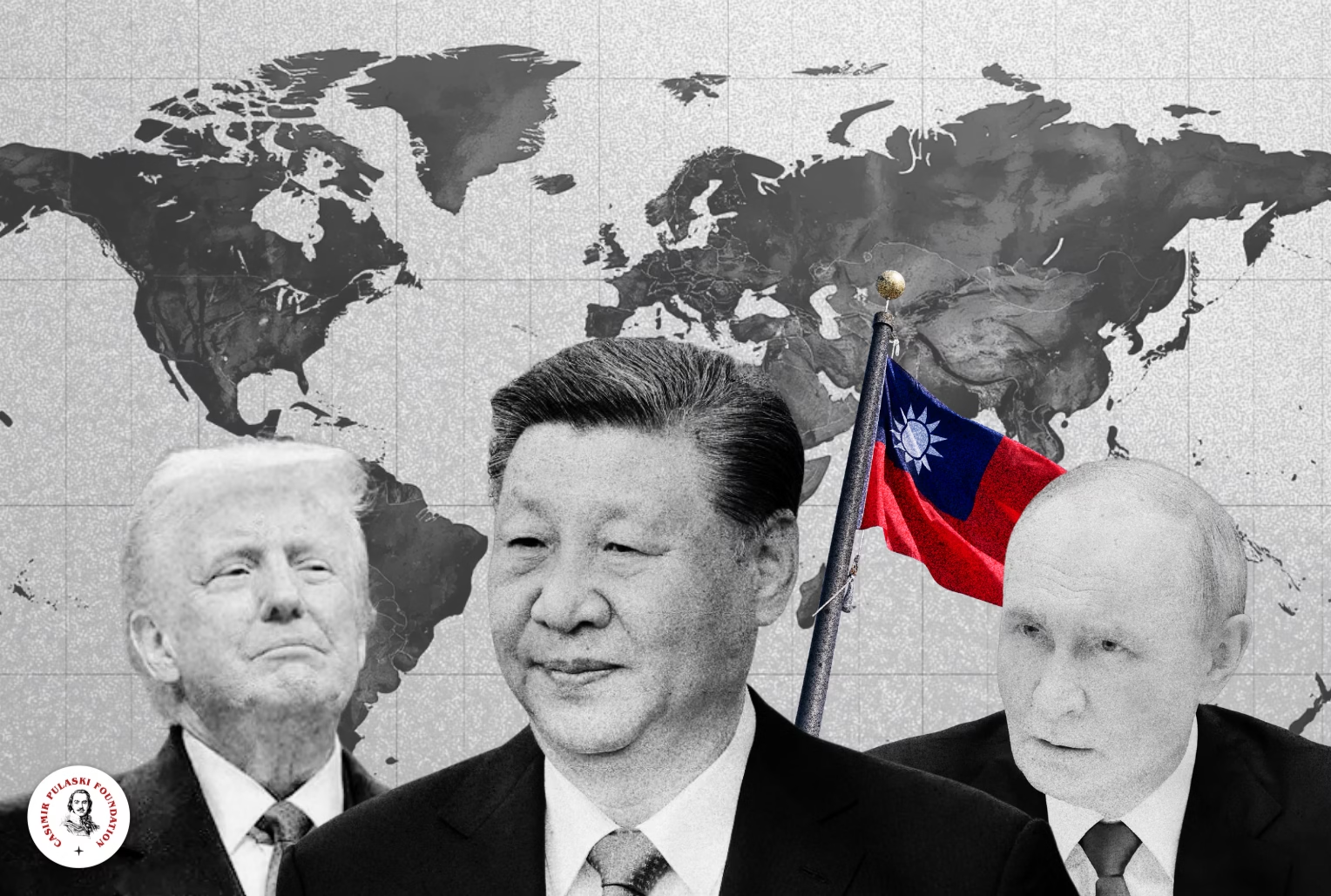
The three-day Donald Trump–Xi Jinping summit, held on 23–25 September 2026, has been widely described as rich in ceremony but poor in substance. The leaders of the United States and the People’s Republic of China (PRC) failed to achieve a breakthrough on any of the major international disputes currently at stake, nor did they announce any significant new initiatives.
Autor: Krzysztof Kozłowski
Opublikowano: 30/09/2026
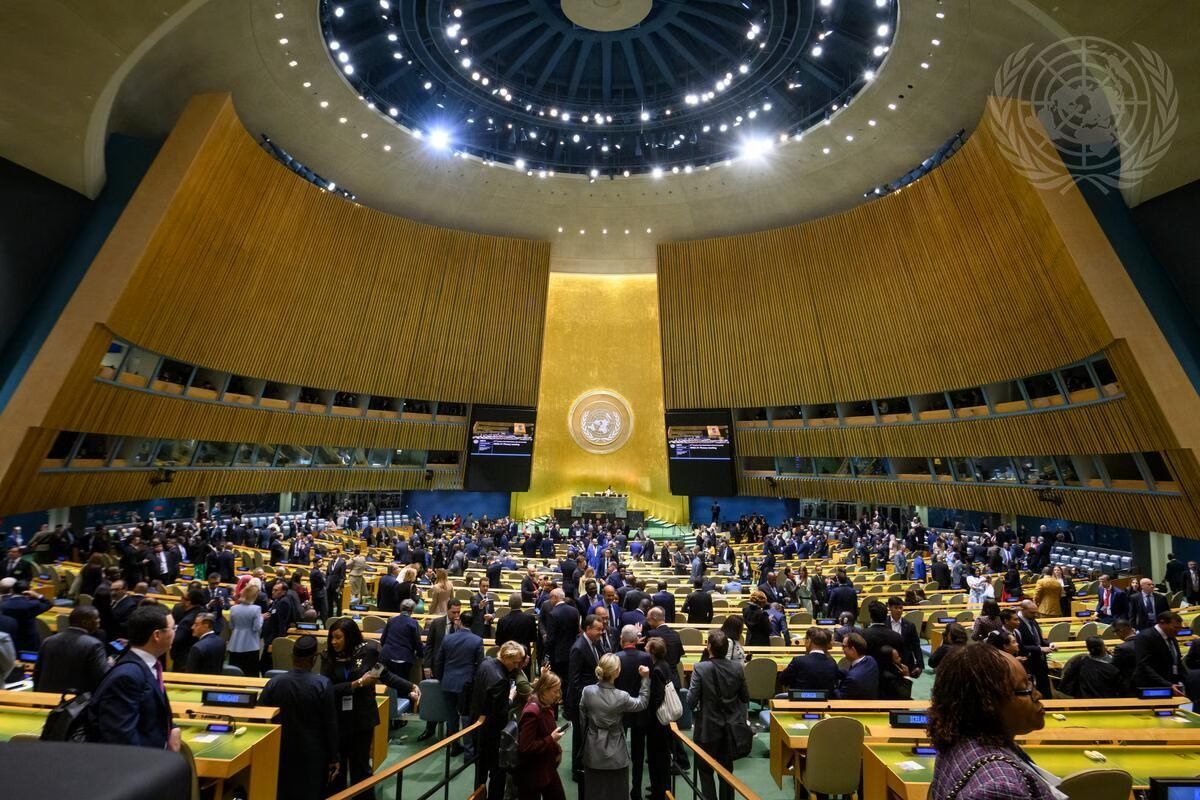
The address of Palestinian President Mahmoud Abbas was played from a recording, because his delegation had been denied US visas. Abbas spoke of a genocidal war in Gaza, warned that the very existence of the Palestinian people is now under threat, and appealed to Donald Trump to honour his commitment to prevent the annexation of Palestinian land.
Autor: Maciej Dachowski
Opublikowano: 25/09/2026
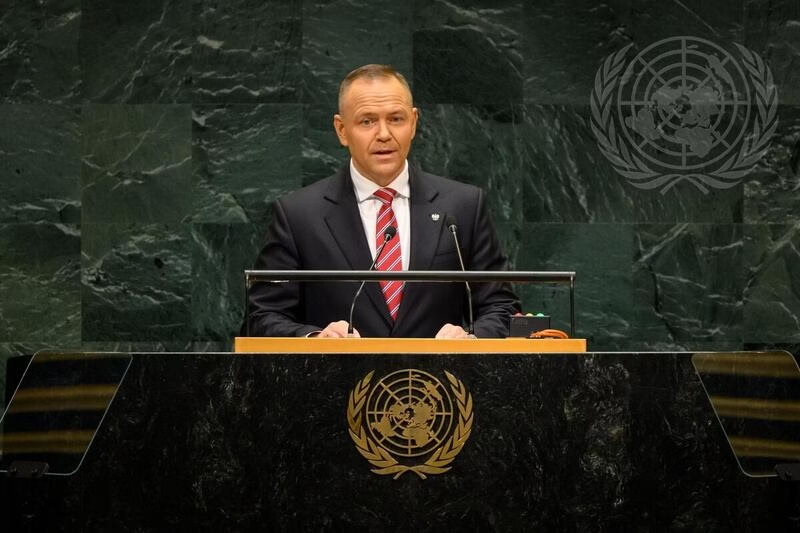
The first day of the debate produced a shared diagnosis of a collapsing order. The second produced a dispute over whether the UN is worth repairing at all. Rwandan Prime Minister Justin Nsengiyumva said that the Organization is better at responding to crises than at preventing them, and that institutions earn legitimacy through results rather than promises.
Autor: Maciej Dachowski
Opublikowano: 24/09/2026
The speeches on the first day of the general debate of the UN General Assembly produced a fairly coherent diagnosis, but no shared remedy. UN Secretary-General António Guterres spoke of four challenges linked to the exercise of power, namely war, inequality, climate change and artificial intelligence.
Autor: Maciej Dachowski
Opublikowano: 23/09/2026
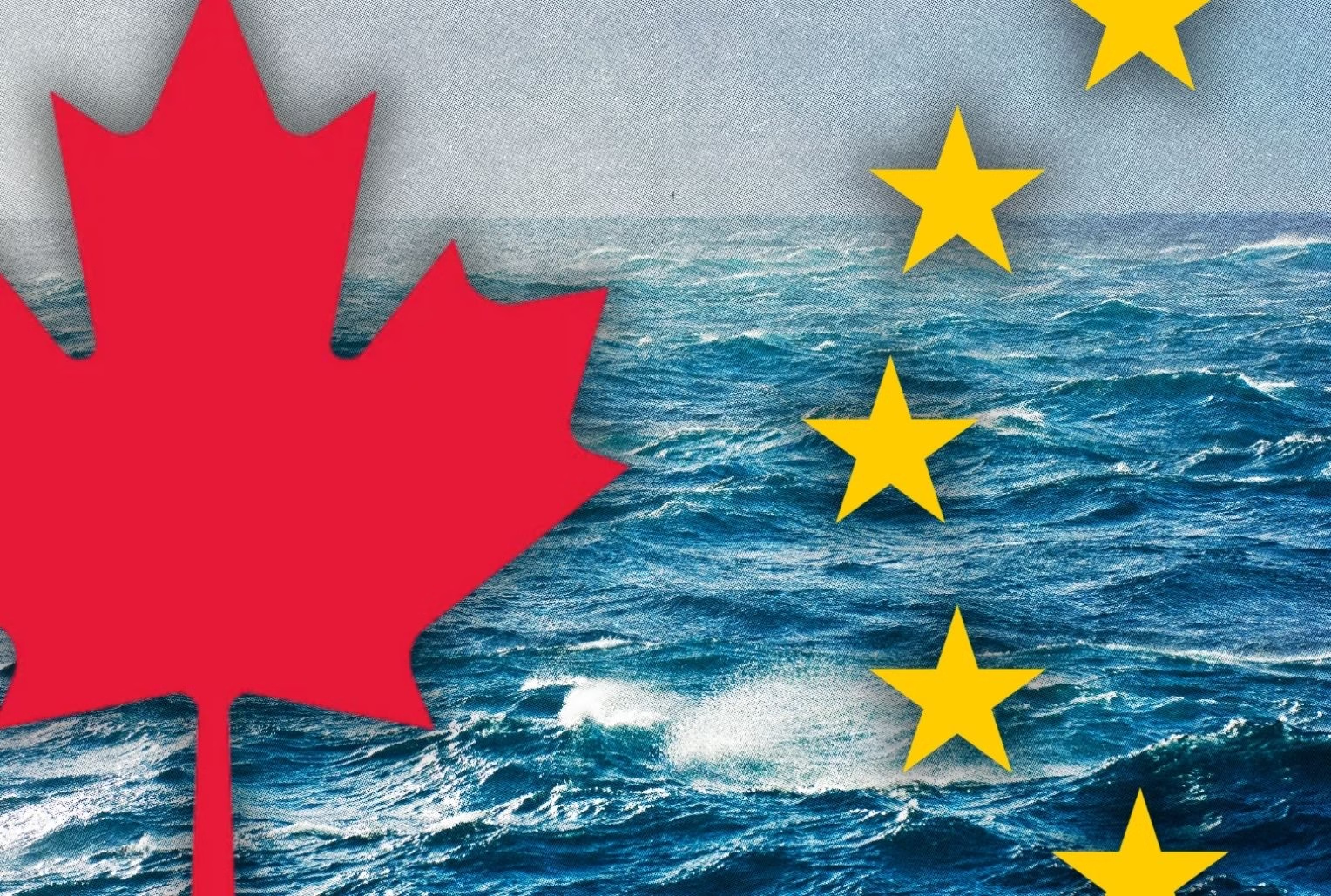
As the Pentagon reviews the US military presence in Europe and allied capitals assess its possible consequences, European Commission President Ursula von der Leyen used her September State of the Union address to present two initiatives that go notably beyond the existing repertoire of EU external policy: an offer of associate member status to Canada and a proposal for a European Security Council.
Autor: Patryk Litwinski
Opublikowano: 23/09/2026

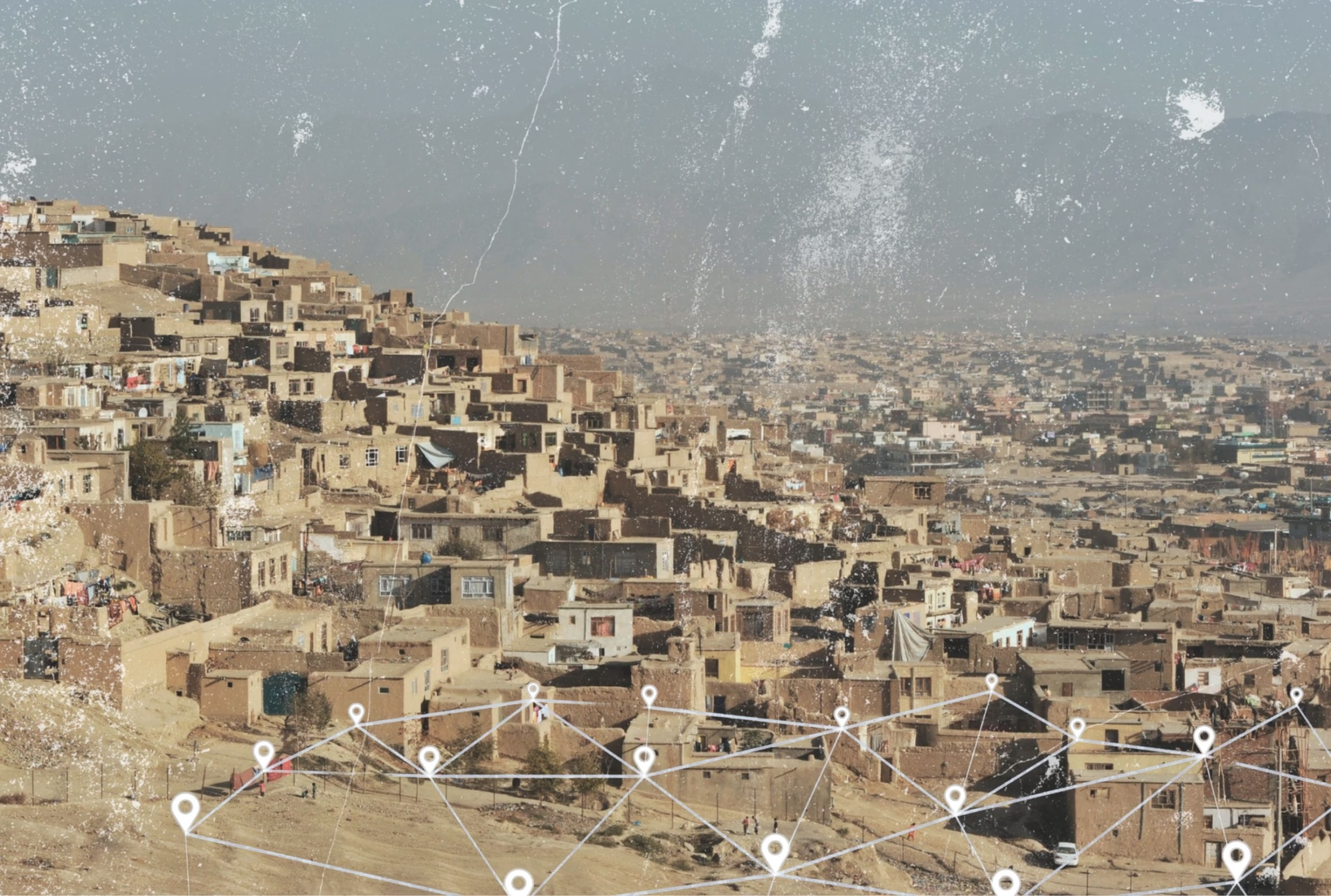
On 7 September 2026 an agreement was signed in Kabul that in ordinary circumstances would have been trade press news at most. The Saudi Delta group agreed with the Taliban Ministry of Mines and Petroleum to explore for oil and gas in the west of the country, in Herat province, on the border with Iran and Turkmenistan.
Autor: Maciej Dachowski
Opublikowano: 22/09/2026

Since 2022, Russia has systematically attacked Ukraine's energy infrastructure. The first wave of strikes targeted substations, cutting off power distribution; the second hits generating capacity directly. According to data cited by BGK, Ukraine has lost around 70% of its pre-war generating capacity, while gas production fell by around 40% in 2025. The aim of this energy terrorism remains to paralyse the economy and break the will to resist – not only through the hardships caused by restricted access to electricity, water and heating, but through conditions that directly endanger civilians' lives, especially in winter.
Autor: Ewa Polak
Opublikowano: 15/09/2026
On 1 September 2026 Bishkek hosted seventeen heads of state and government at the annual summit of the Shanghai Cooperation Organisation, the twenty-sixth in its history, convened on the twenty-fifth anniversary of the organisation's founding. The host, Kyrgyzstan, which had just ended its year-long chairmanship, had a few weeks earlier been elected a non-permanent member of the United Nations Security Council for 2027 and 2028, while in the same election Germany lost the seat reserved for the Western group.
Autor: Maciej Dachowski, Ewa Polak
Opublikowano: 04/09/2026

A few days before the first summit of the Carpathian Integration Initiative, scheduled for September 2026 in the Ivano-Frankivsk region, Warsaw still does not know whom it will send. Volodymyr Zelensky has invited representatives of seven states of the region to the summit, Poland among them, he is steering the project personally, some leaders have already confirmed their attendance and more than five hundred business representatives are expected on site, and yet Poland's decision on the level of its representation still has not been taken.
Autor: Maciej Dachowski
Opublikowano: 01/09/2026
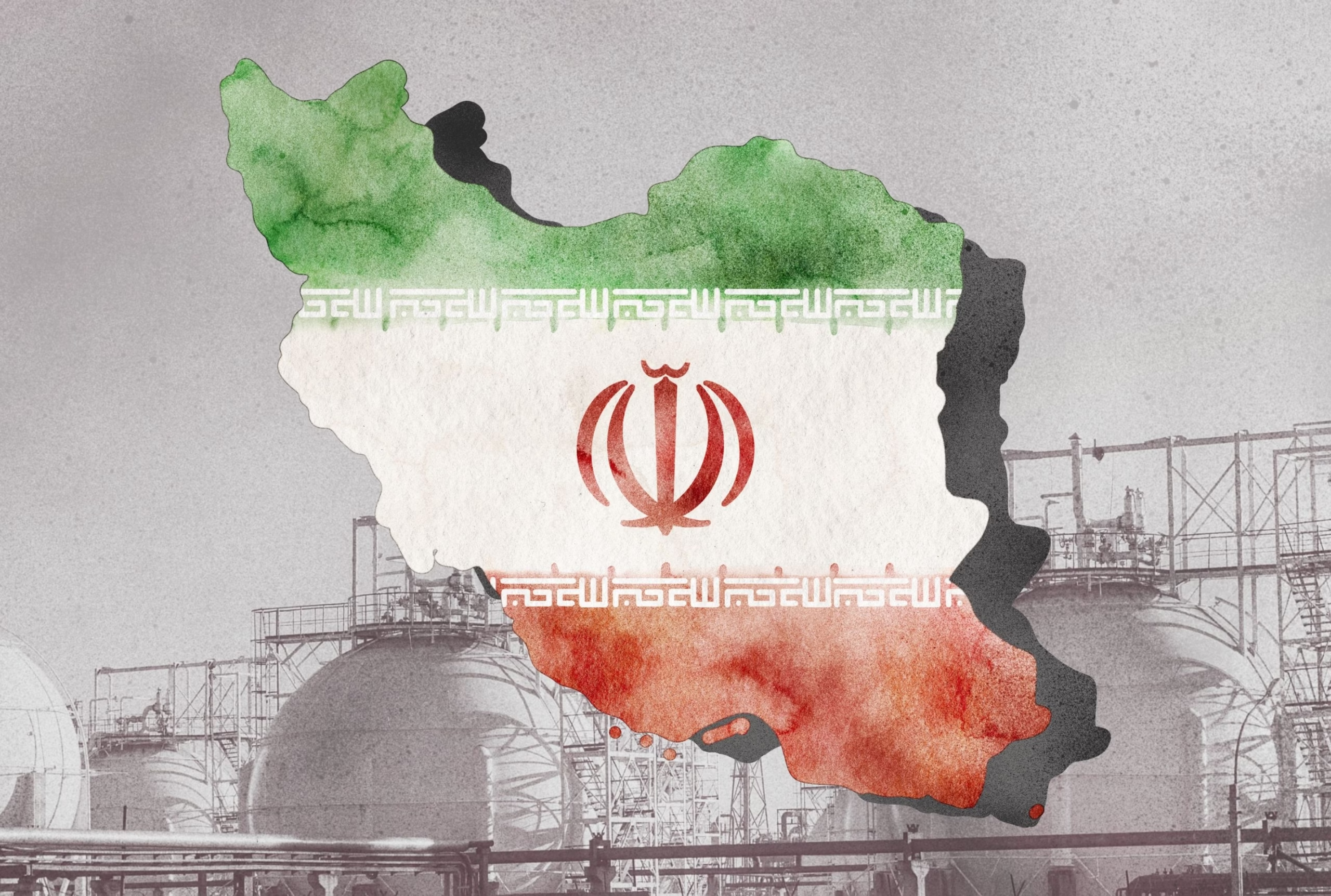
Iran emerges from the war with Israel and the US strengthened, regardless of the costs it has incurred. Unless a permanent collapse in negotiations occurs, it can recover its losses very quickly, and given its potential, it has a chance of becoming one of the world's largest economies within a few years. Crucial in this context is not the nuclear issue, but the high-stakes game over the Strait of Hormuz.
Autor: Witold Repetowicz
Opublikowano: 26/08/2026

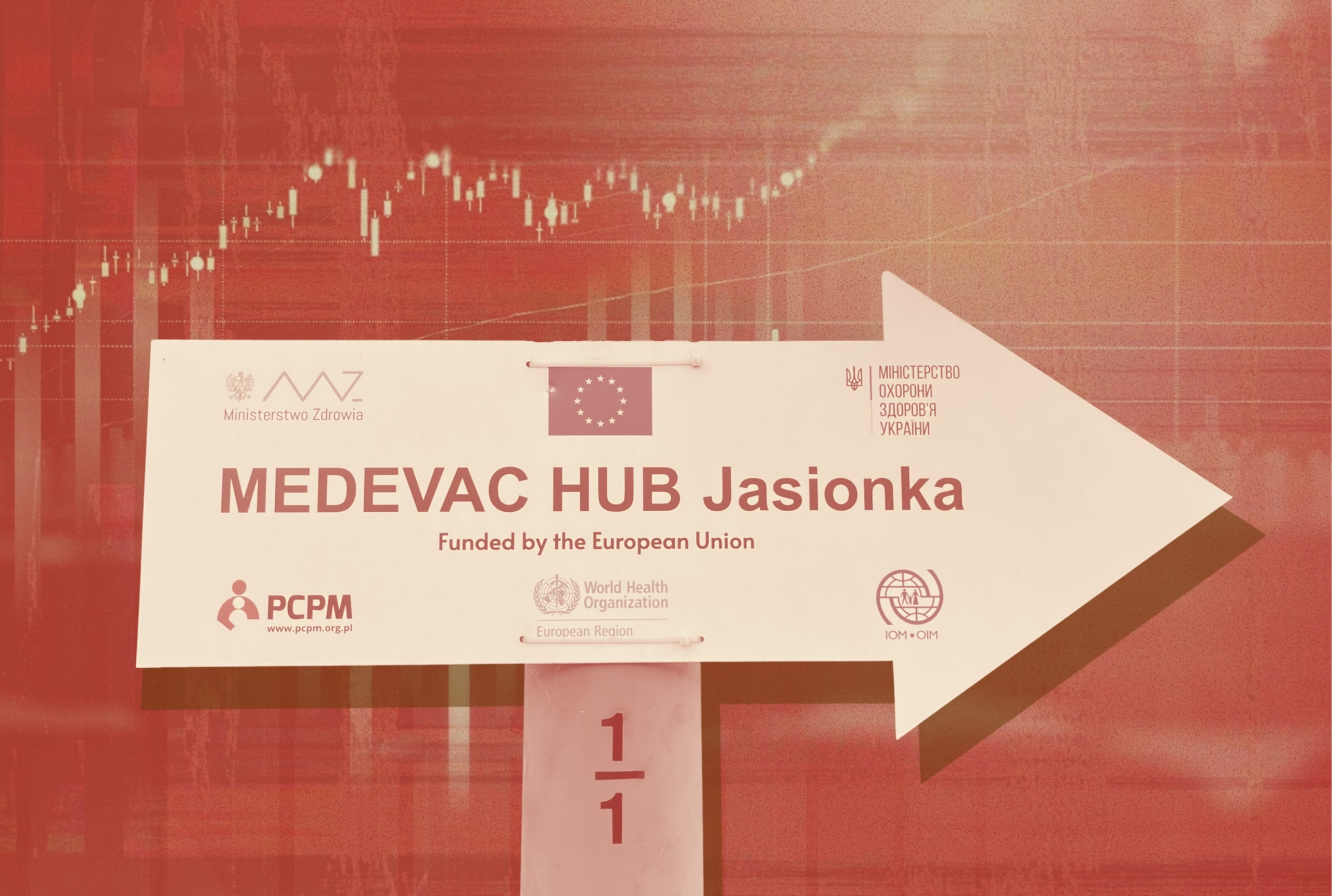
The Union Civil Protection Mechanism was created as a tool for fast, targeted assistance between neighbours in response to events that exceed a single state's capacity to respond – from fires, floods and earthquakes to industrial accidents, chemical contamination or man-made disasters. The last two decades, and especially the events of recent years – the COVID-19 pandemic and the war in Ukraine – have tested it in ways its architects never anticipated: not as a single, closed-ended event, but as a prolonged, multidimensional crisis with no clear end point.
Autor: Ewa Polak
Opublikowano: 24/08/2026
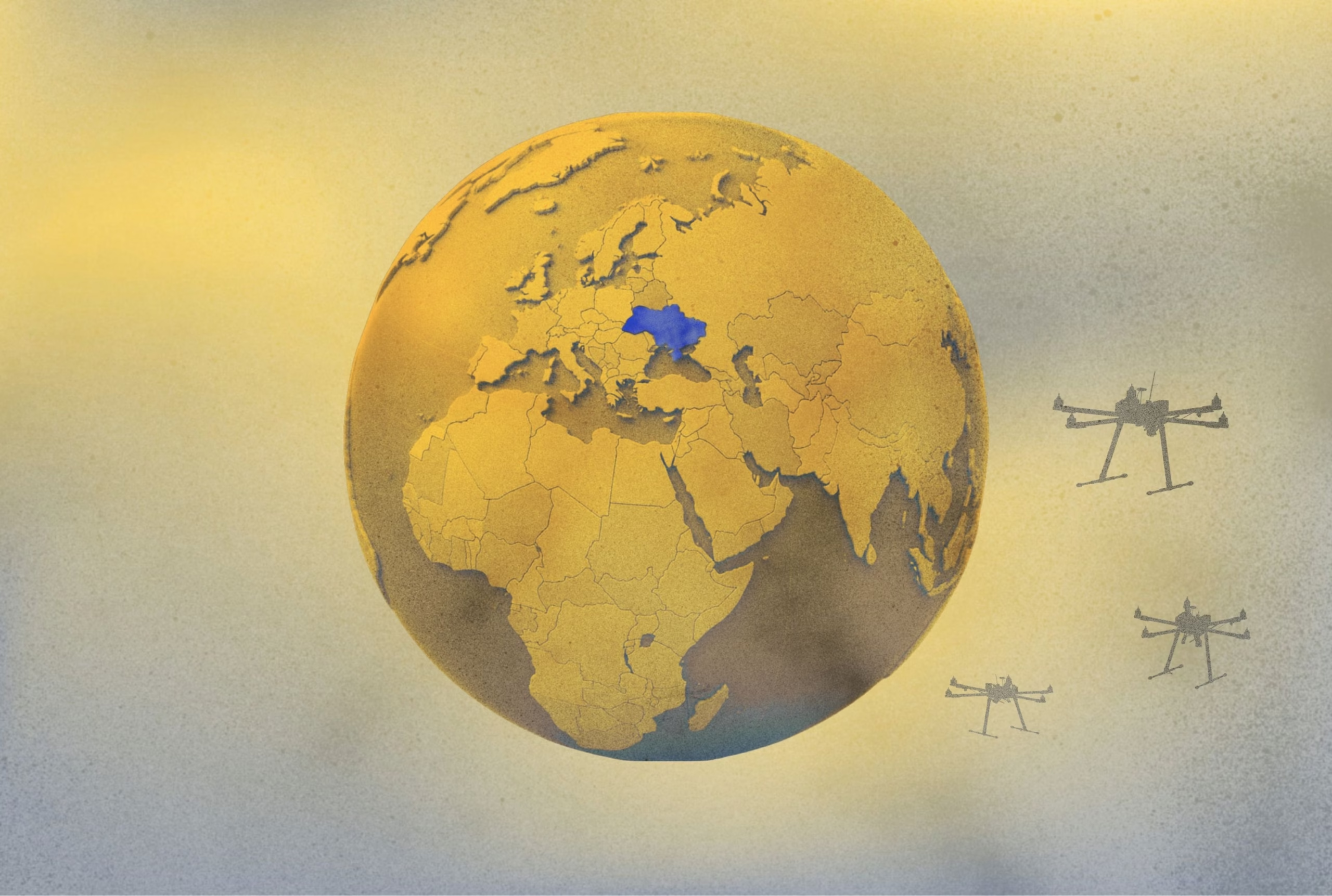
In late March 2026, a month after the outbreak of the war with Iran, Volodymyr Zelensky toured Jeddah, Abu Dhabi, Doha and Amman in three days. With Saudi Arabia, the United Arab Emirates, Qatar and Jordan he signed defence cooperation agreements providing for joint investment, joint production and the sharing of experience and solutions in defence against missiles and unmanned aircraft.
Autor: Maciej Dachowski
Opublikowano: 20/08/2026
In recent months we have been witnessing a very significant shift in international relations. What is changing is the way states build their position in the international system. A growing number of middle powers no longer organise their entire strategy around a single centre, nor do they treat relations with competing great powers as mutually exclusive.
Autor: Maciej Dachowski
Opublikowano: 17/08/2026
Autor: Reuben F. Johnson
Opublikowano: 29/07/2026
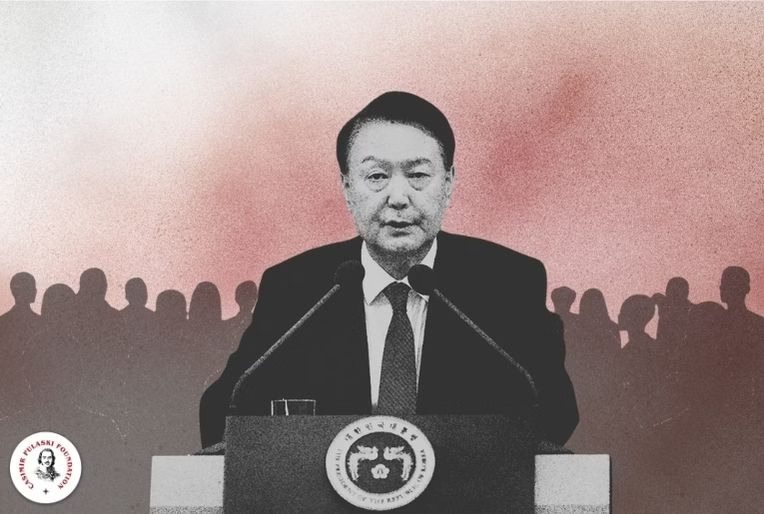
On June 13, Yoon Suk Yeol, the former president of the Republic of Korea (ROK), was sentenced to two years in prison after being found guilty of illegally receiving opinion polling services worth $179,800 for free from a political broker. Just four days earlier, on June 9, ROK Supreme Court upheld his seven-year prison sentence for obstructing authorities attempts to arrest him over his short-lived imposition of martial law in 2024.
Autor: Zuzanna Kowzan
Opublikowano: 20/07/2026
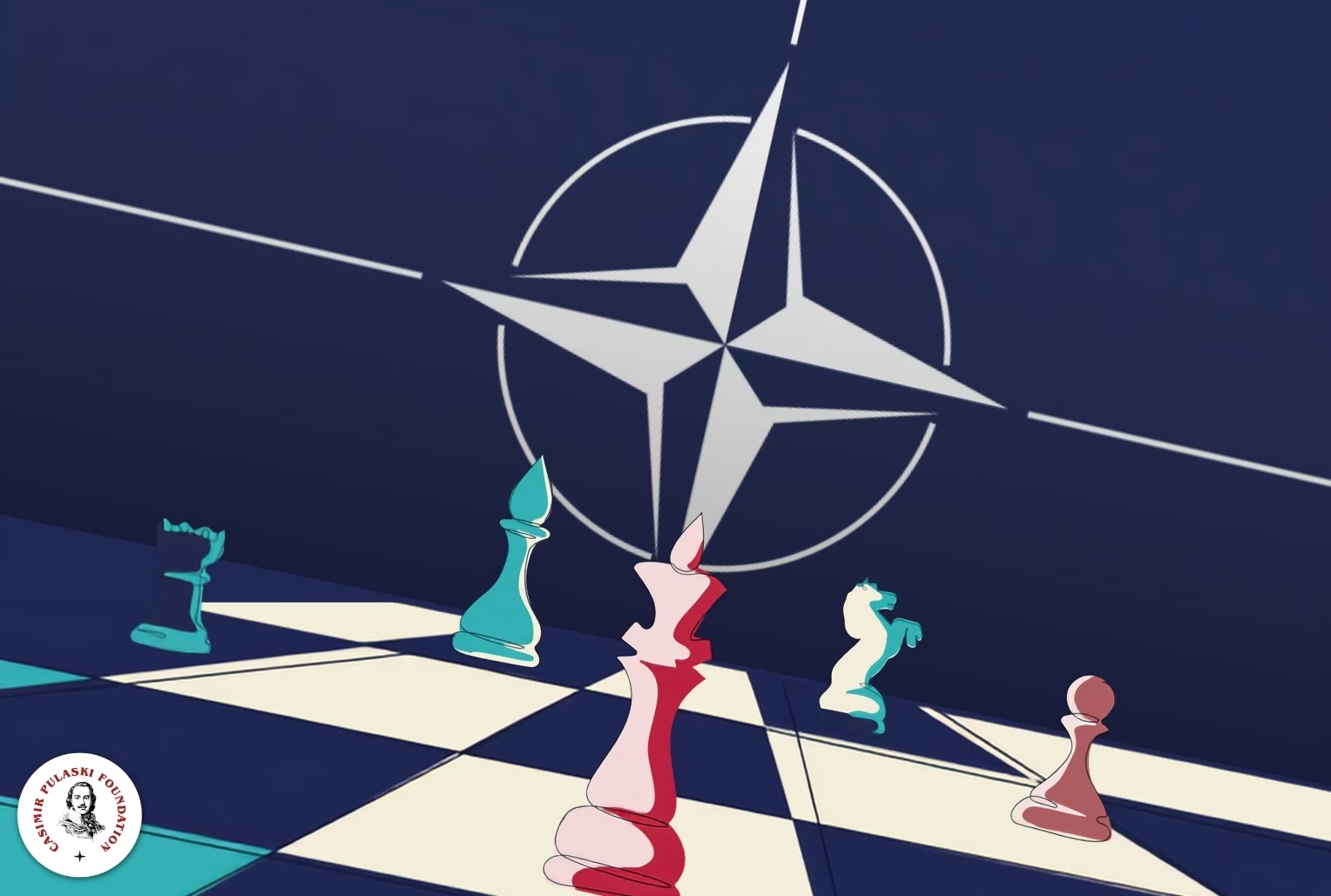
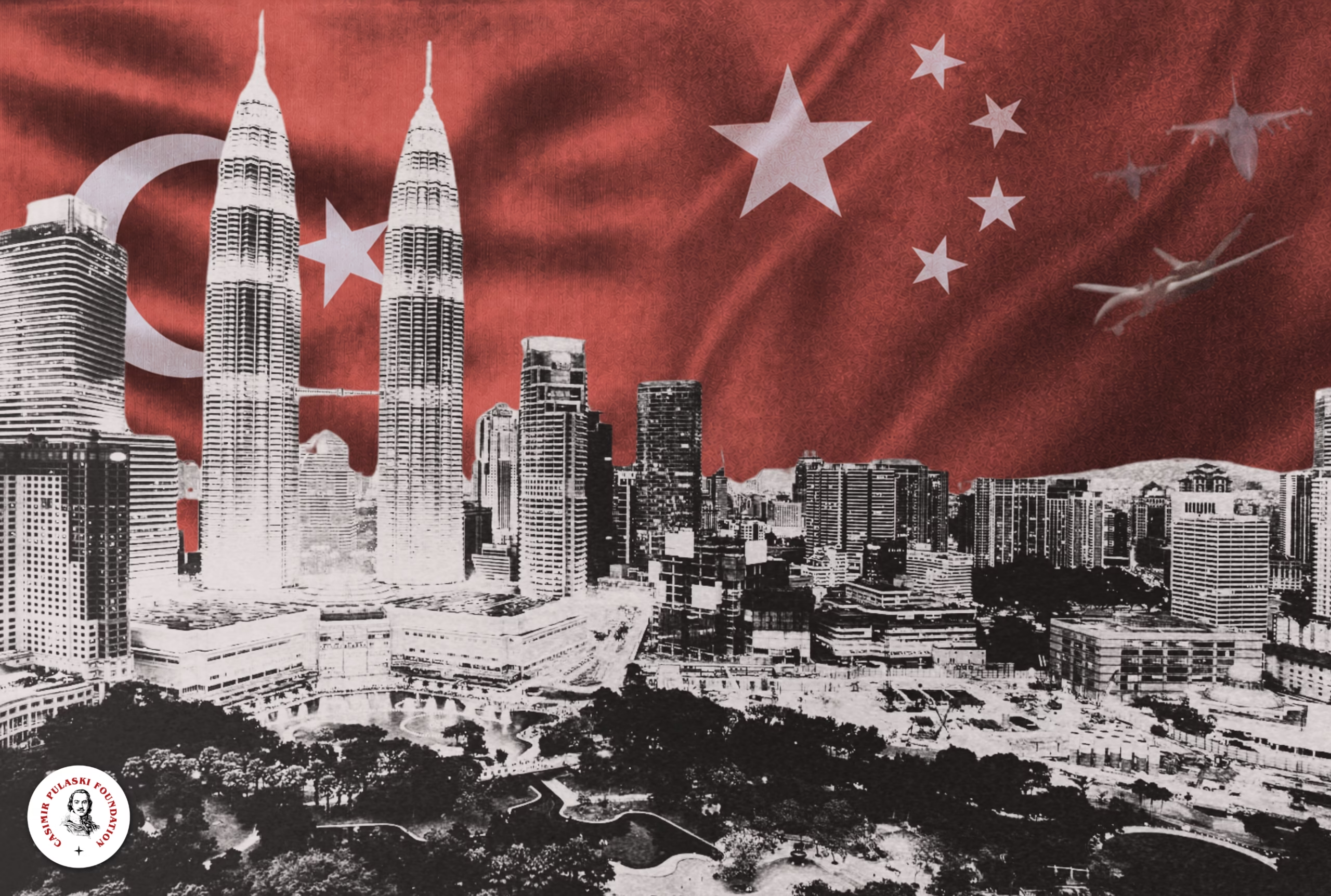
The summit in Ankara will deliver contracts, memoranda, and letters of intent, yet it will not clarify what Europe lacks most acutely — its own answer to the question of the long-term direction of the transformation being undertaken. At the root of the contemporary identity crisis lies not a deficit of financial resources but the absence of a shared European strategic culture, which Ankara may throw into particularly sharp relief, proving that material rearmament is outpacing the ability to define directions for joint action.
Autor: Patryk Litwiński
Opublikowano: 06/07/2026
Around a decade ago at the Singapore Air Show the executive of a major US defence company told me more than once “my best sales agents are the Chinese. Every time they make a public show of steaming their aircraft carrier out for sea trials or commit another one of their violations of some nation’s territorial waters or build up another one of their artificial islands – that’s when my phone starts ringing. Other nations in the region suddenly want to know how soon they could have some US-made military hardware, especially if they are EDA [Excess Defence Articles].”
Autor: Reuben F. Johnson
Opublikowano: 18/06/2026
Second half of May 2026 was a busy time in Asian diplomacy
Autor: Krzysztof Kozłowski
Opublikowano: 18/06/2026

Todays near standoff between the Philippines and the People’s Republic of China (PRC) in the Scarborough Shoal is a reminder that over time foreign policy mistakes only expand in their complexity and negative implications.
Autor: Reuben F. Johnson
Opublikowano: 23/04/2026

Away from the deadlines reporting on the US-Israeli war with Iran (now in a hiatus phase), another, concurrent armed conflict has been taking place, expanding in both geographic scope and intensity, namely the Israeli invasion of Lebanon. Hezbollah launched projectiles on 1st March into Haifa (all of which were intercepted) as revenge for the killing of Iranian Supreme Leader Ali Khamenei. The Israeli responded with a rocket barrage ultimately targeting 50 villages south of the Litani River and southern Beirut (evacuation orders were sent last minute to the Lebanese civilian population), followed by a ground assault. This event marked the outbreak of the seventh armed conflict between Israel and Lebanon since the establishment of the State of Israel
Autor: Karolina Pawlik
Opublikowano: 20/04/2026
Autor: Maciej Dachowski
Opublikowano: 17/04/2026

Autor: Maciej Dachowski, Ewelina Załuska
Opublikowano: 15/04/2026